Re-Wilding Wildcat Creek

A riparian restoration project in partnership with the US Forest Service.
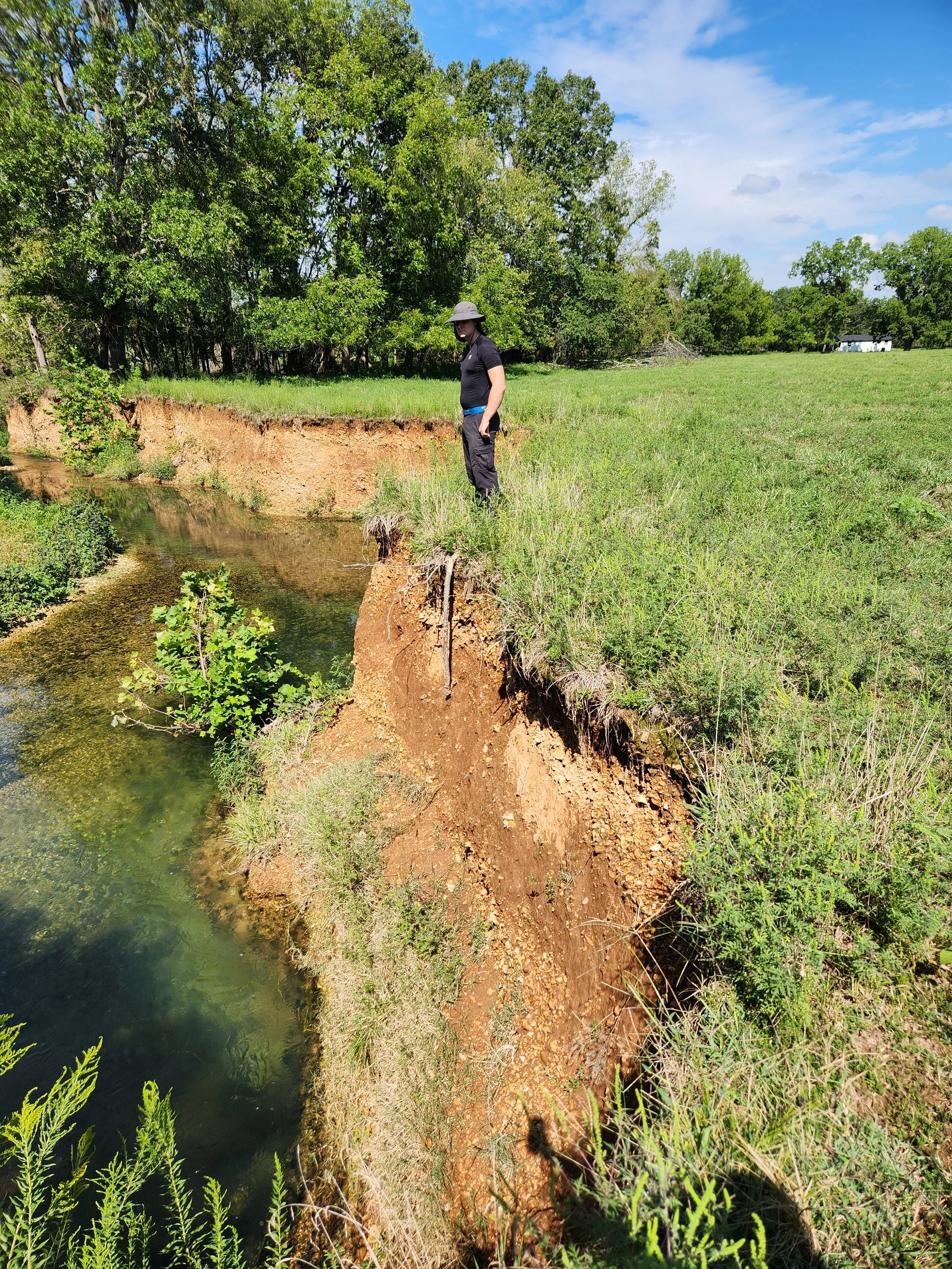
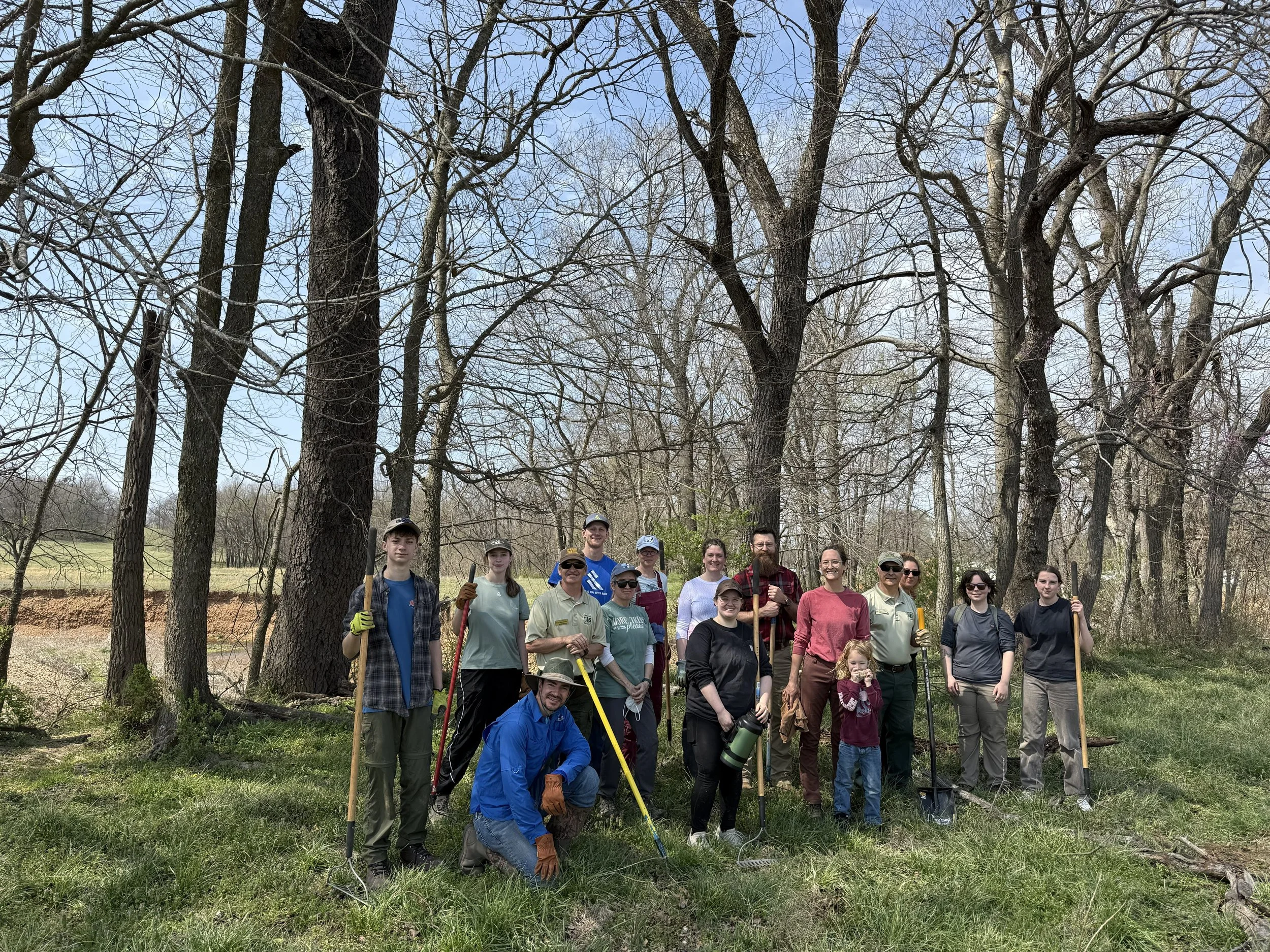
The Illinois River Watershed Partnership and the United States Department of Agriculture (USDA), Forest Service partnered to plant 3,784 native trees, shrubs, and grasses along an eroded section of Wildcat Creek, a tributary to Osage Creek, in Tontitown. Over 39 different native species were planted by 29 volunteers, IRWP staff, US Forest Service staff, Arkansas Game and Fish Commission staff, and others.
These native plants, along with livestock exclusion from Wildcat Creek, will allow the riparian buffer to revegetate and armor its eroded streambanks, improving water quality for the Illinois River Watershed and the lease-holder’s livestock operation.
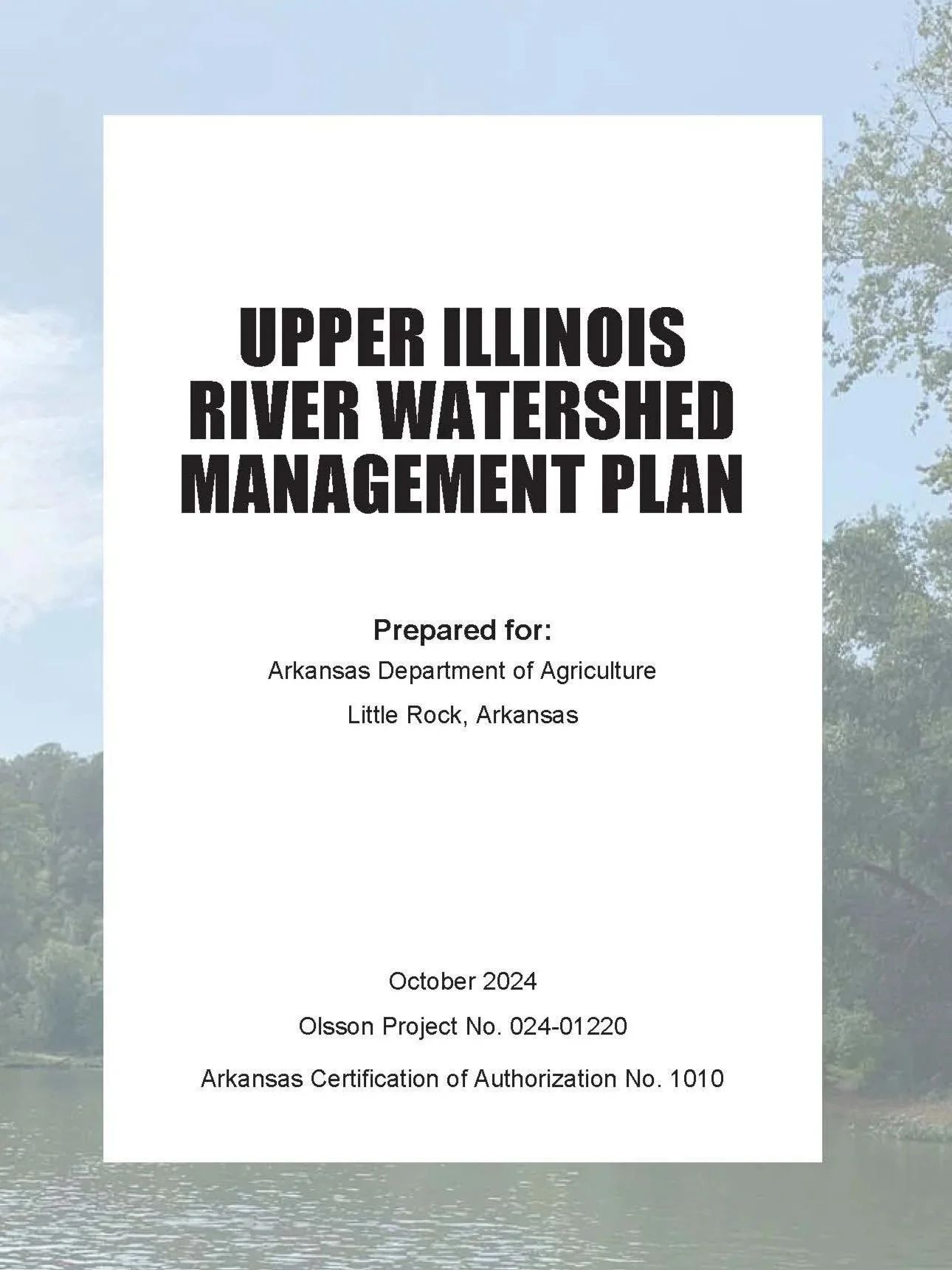
The updated Upper Illinois River Watershed Management Plan was published in October 2024.
The recently updated Upper Illinois River Watershed Management Plan identified livestock access control and riparian buffers as two of the most impactful Best Management Practices (BMPs) for the watershed. Excluding livestock from streams and wetlands can decrease land/soil erosion, decrease bacteria in streams, reduce fence maintenance costs, improve livestock health, and improve water quality. Adding a 50’ or greater riparian buffer can decrease water temperature, reduce sediment, nutrients, and bacteria and improve streamside and aquatic habitat. Put these practices together along with rotational grazing and landowners can improve herd health, forage management, reduce their downstream neighbors’ flooding, and even help the cities of Siloam Springs and Tahlequah reduce drinking water treatment costs!
Want to start improving water quality on your farm? Schedule a free site visit with IRWP.
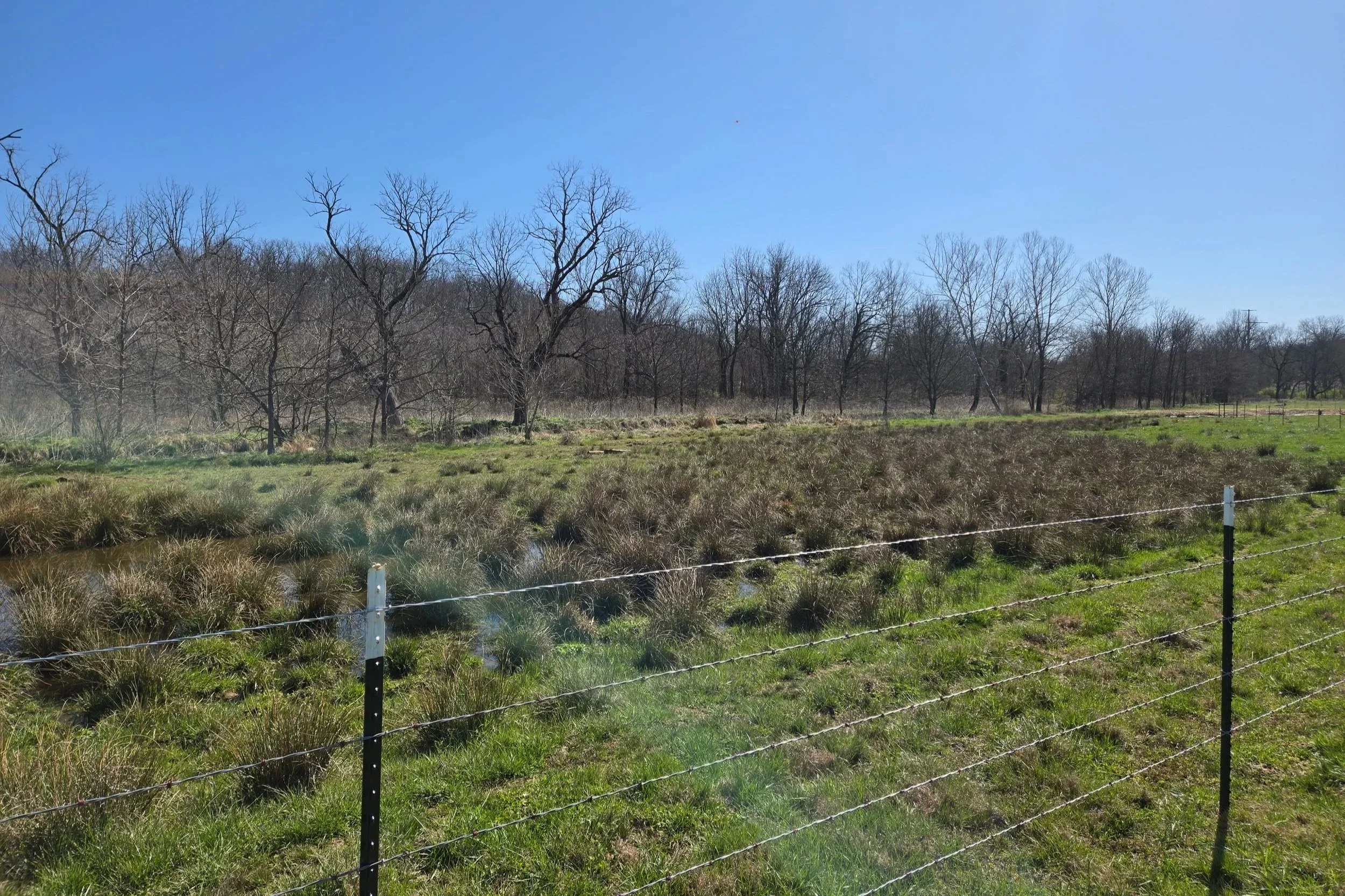
Five strands of barbed wire, designed to follow NRCS specifications, excludes livestock from a wetland.
The US Forest Service (USFS) manages the Ozark-St. Francis National Forest, including the lands along Wildcat Creek on the Wedington Unit. The USFS partnered with IRWP to address streambank erosion, reduce bacteria and sediment loading into the Illinois River, and improve livestock access and management.
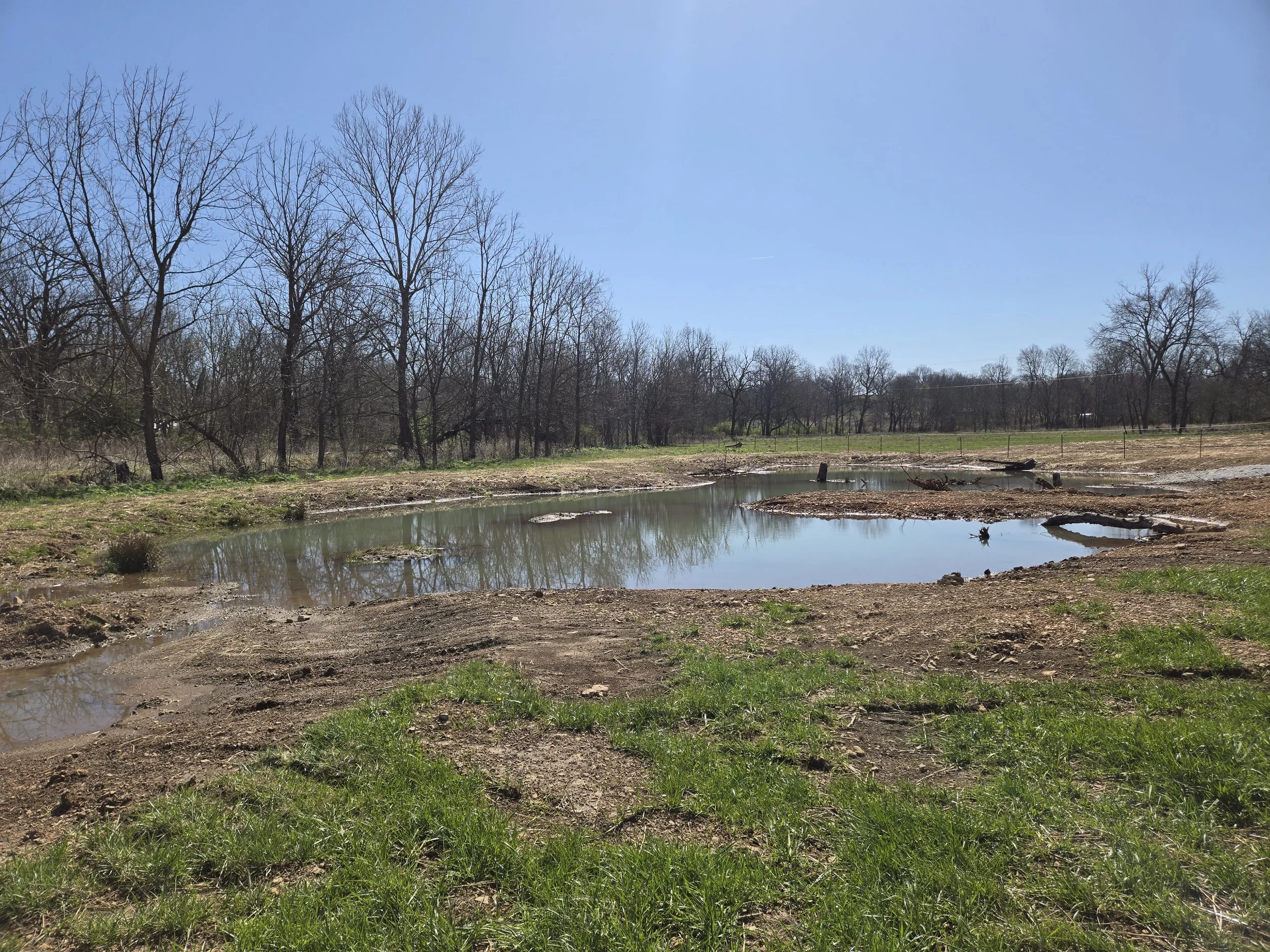
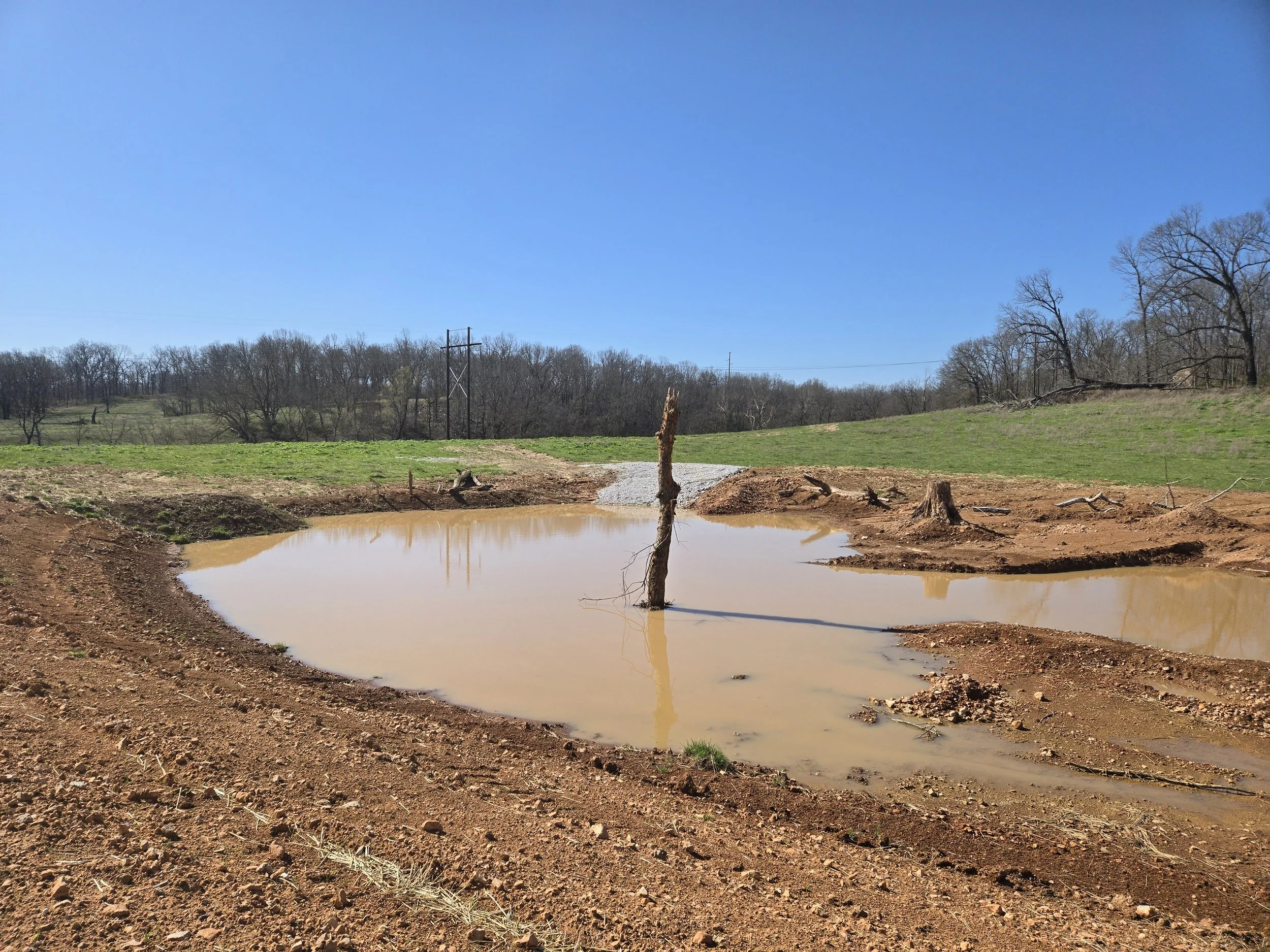
IRWP worked with local contractors to develop two new ponds and exclude cattle from spring runs and wetlands. Excluding cattle from a creek is a great starting point to implementing a Rotational Grazing plan that can improve forage production and soil health.
More than 2.7 miles (14,280 linear feet) of fencing were built along the spring run, wet prairies, Wildcat Creek, and around ponds to limit cattle access. This fencing allows the lease-holders to rotate between paddocks in a rotational grazing system, providing rest periods for the forages to regrow and supports soil health, when managed correctly.
Heavy use areas were installed to protect pond access for livestock and pond entrance areas are managed using floating electrical fence.
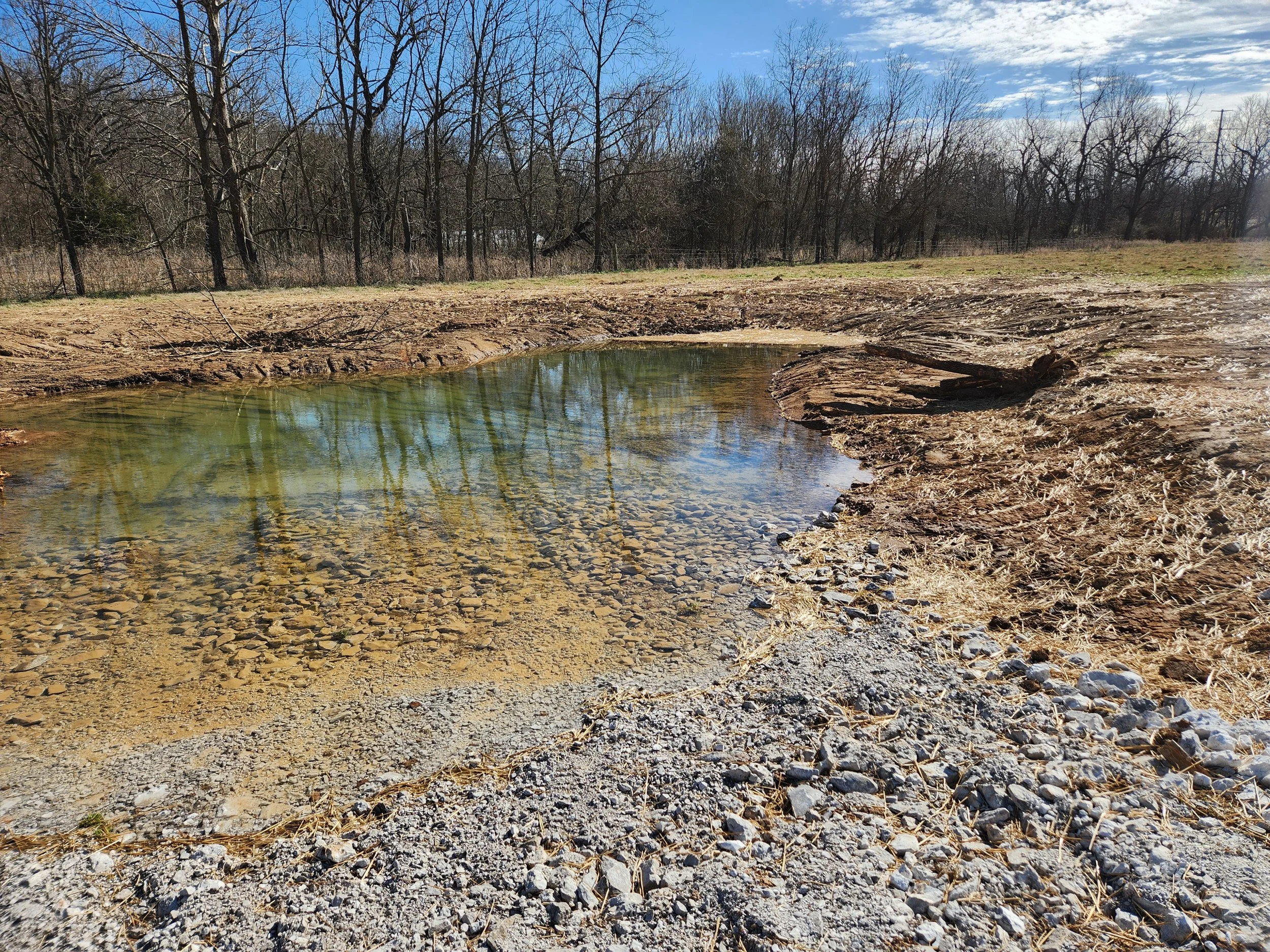
Newly constructed pond with hardened access.
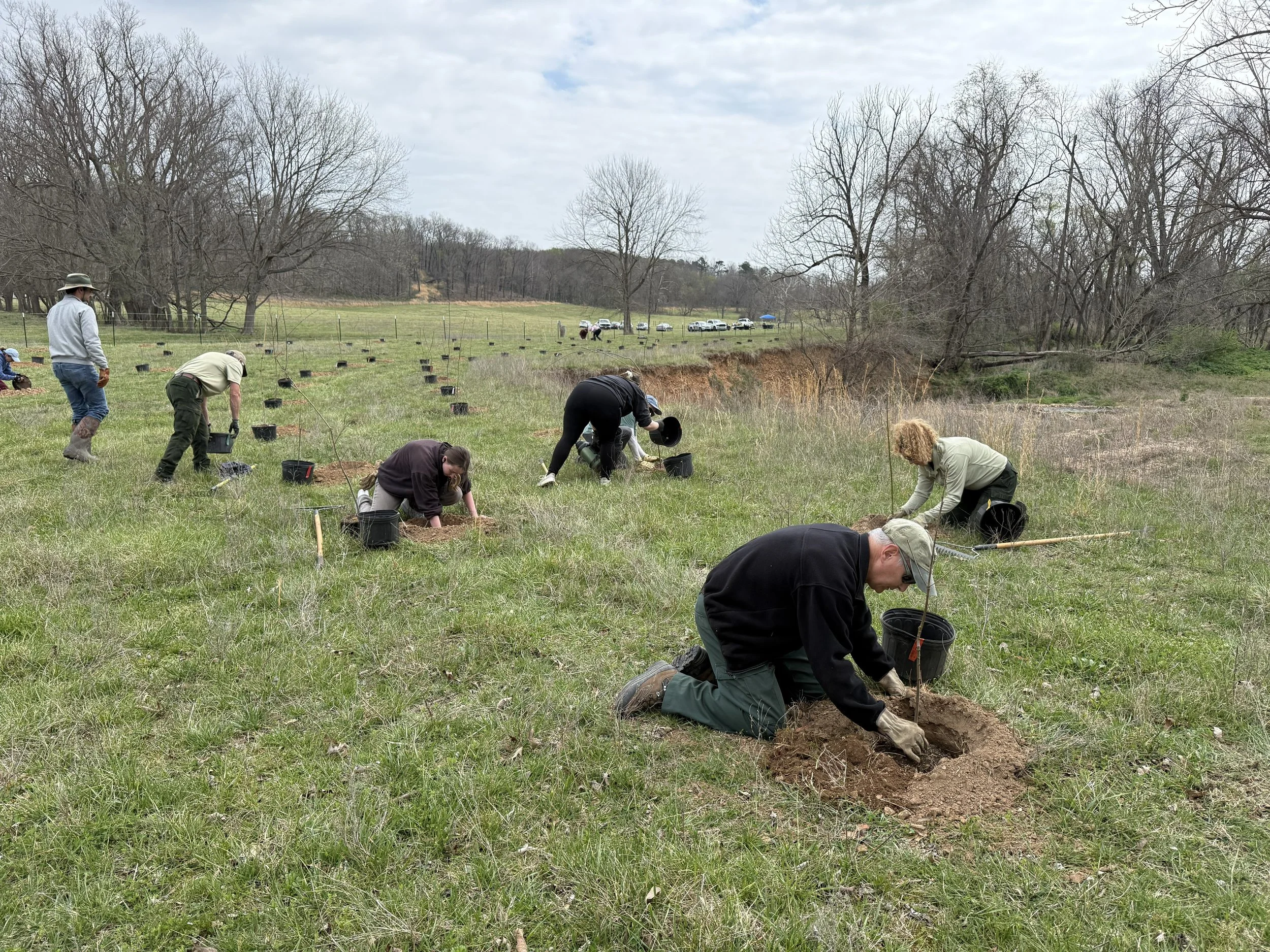
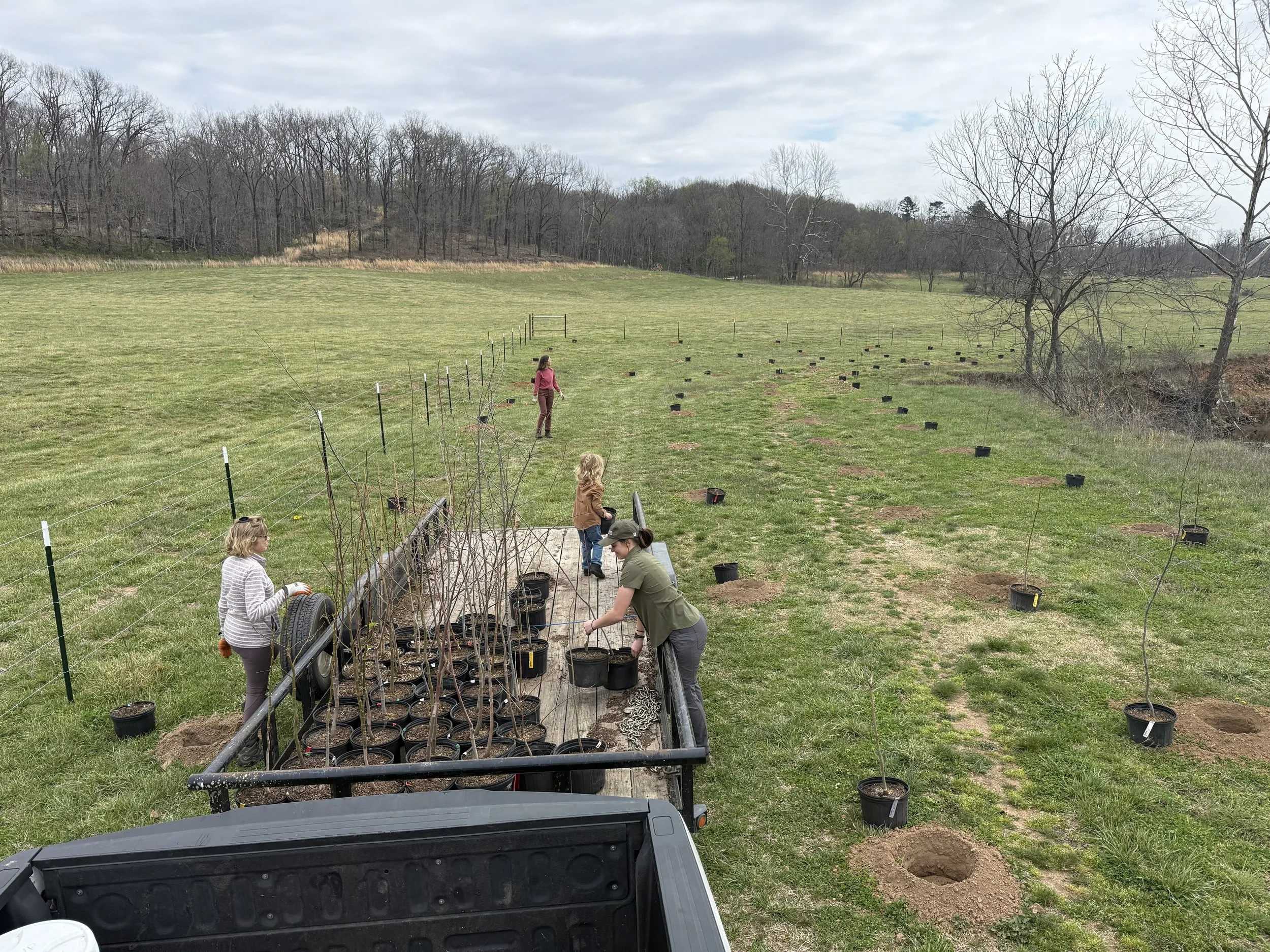
Three gallon potted trees and shrubs were planted along 3,250 feet of Wildcat Creek at 15 foot intervals. An additional 300 live willow stakes were harvested from nearby Logan Springs Preserve, with permission from The Nature Conservancy, and hammered in along 300’ of eroding streambanks.
Species planted included Boxelder, Red Maple, Silver Maple, Paw Paw, Riverbirch, American Beautyberry, American Hornbeam, Native Pecan, Shagbark Hickory, Buttonbush, Redbud, White Fringetree, White Flowering Dogwood, American Filbert, Cockspur Hawthorn, Green Hawthorn, Ozark Witchhazel, Deciduous Holly, Black Walnut, Sweet Gum, Black Gum, Ninebark, Sycamore, Cottonwood, White Oak, Bur Oak, Swamp Chestnut Oak, Water Oak, Willow Oak, Northern Red Oak, Shumard Oak, American Linden, and Slippery Elm.
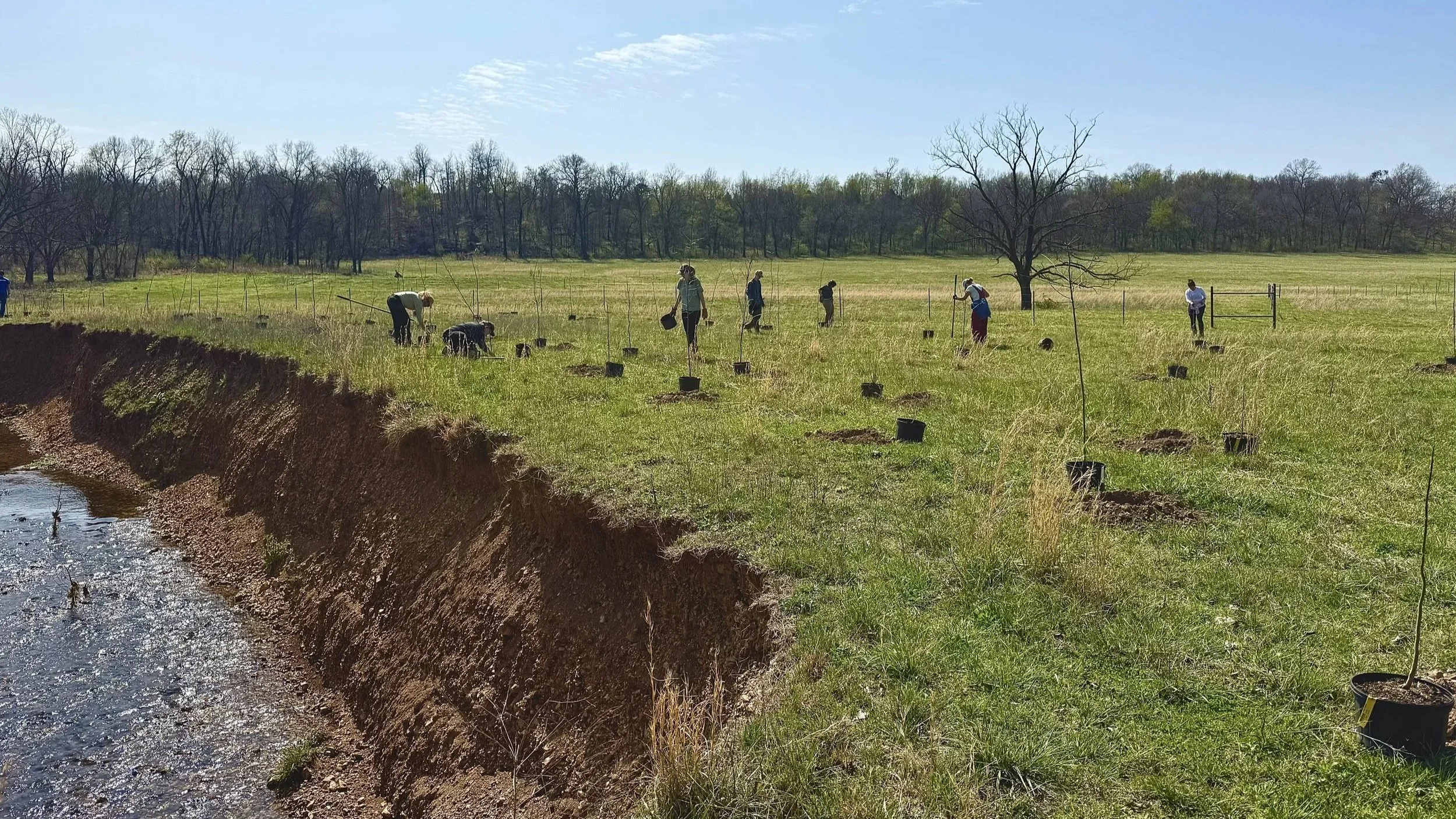
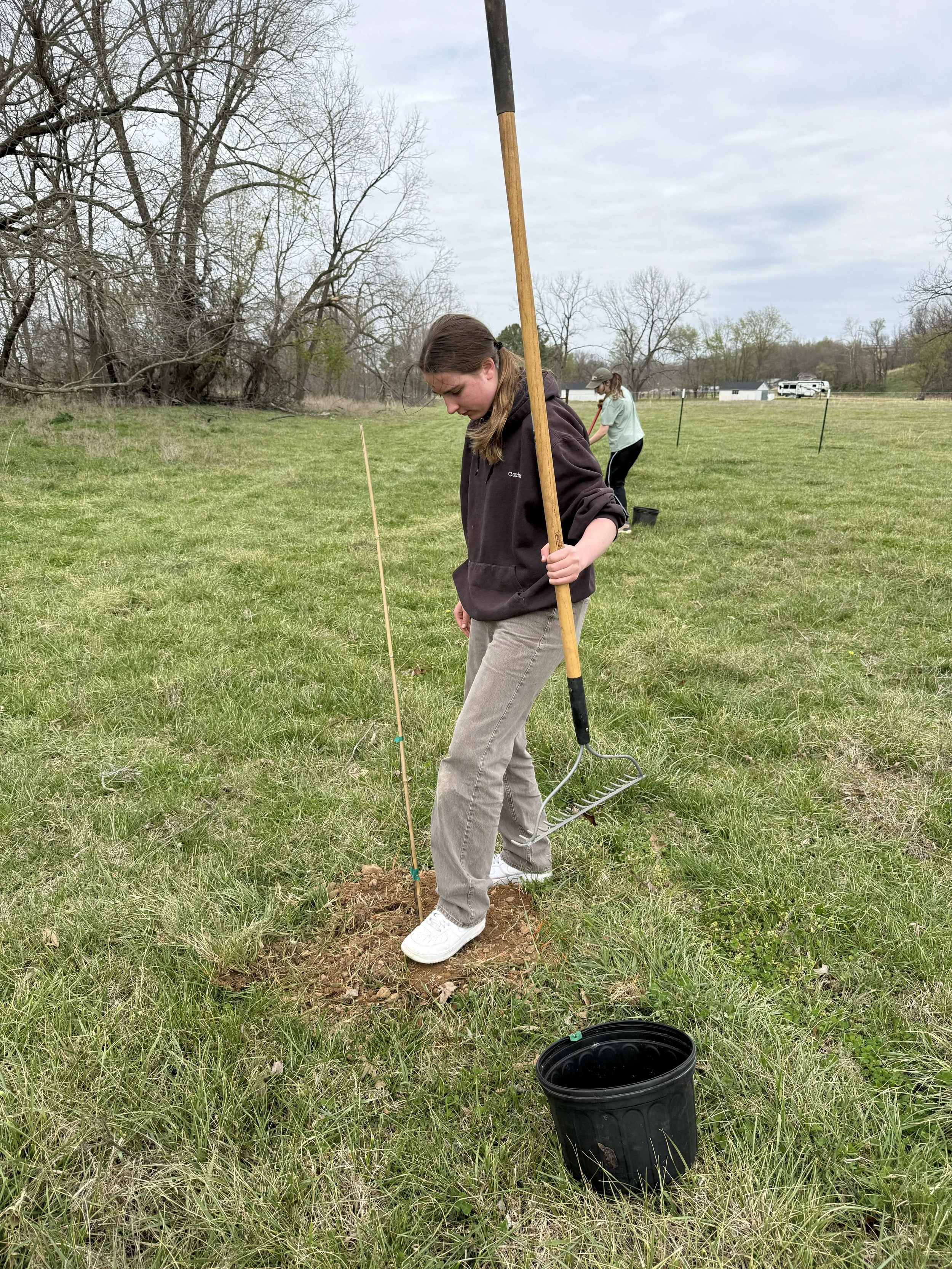
IRWP Volunteers planting natives trees and shrubs along Wildcat Creek.
2,550 native grass and sedge plugs were interspersed to improve soil stability in key areas.
IRWP installed 2,550 native grass plugs along 500 linear feet of unstable streambank after livestock exclusion fencing was installed to help establish the riparian buffer. These faster growing herbaceous species will mature and help stabilized streambanks sooner while larger trees and shrubs get established.
Species included Switchgrass, Big Bluestem, Indian Grass, Canada Wild Rye, Prairie Dropseed, and Bottlebrush Grass.
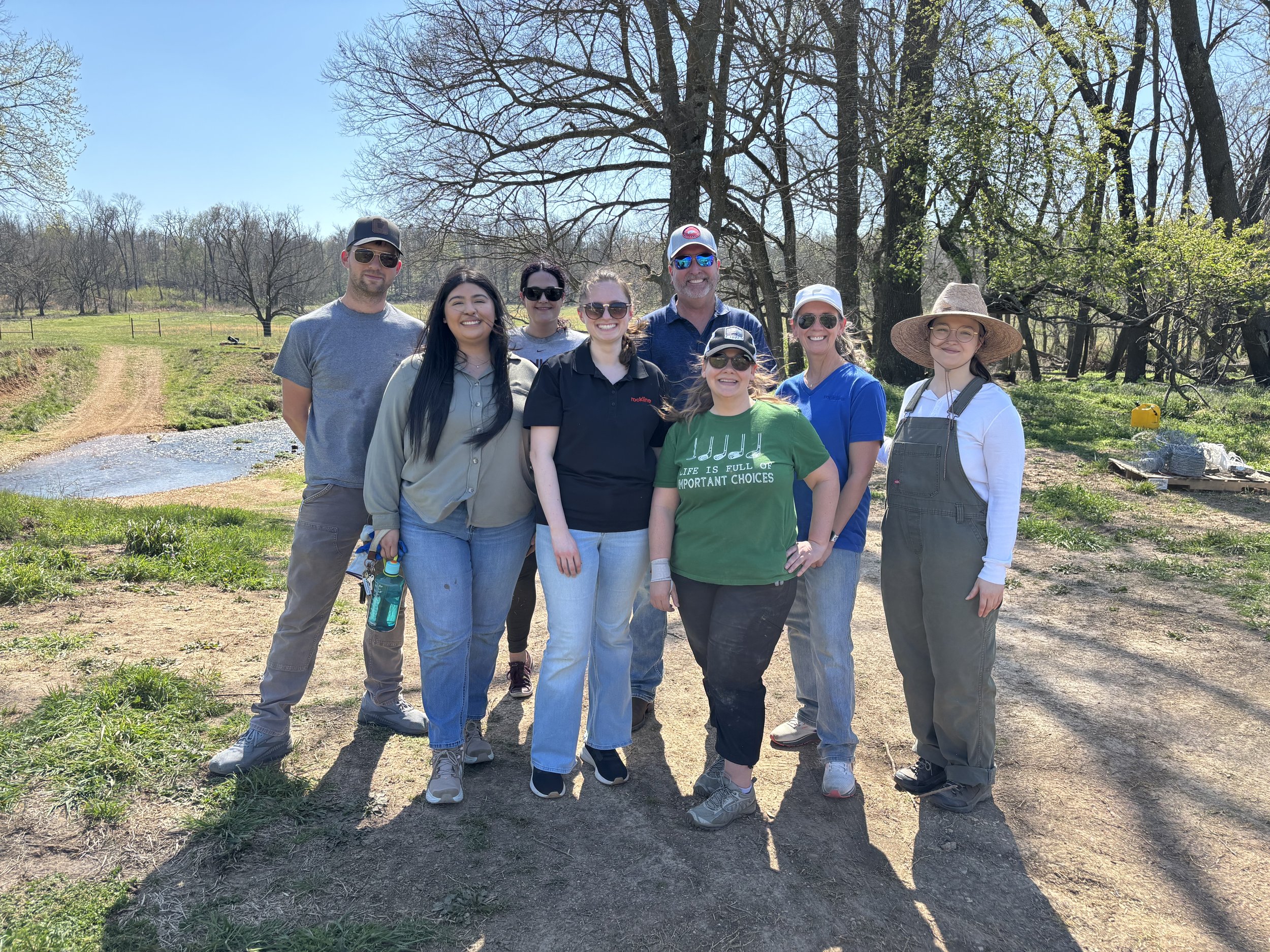
Thank you to all of the volunteers who donated their time and energy to this project. Volunteers came from Siloam Springs High School, Arkansas Game and Fish Commission, Northwest Arkansas Master Naturalists, Burns & McDonnell, and Rockline Industries.
Would you have liked to attend an event like this but didn’t know it was happening? Become an IRWP volunteer and stay in the loop about exciting opportunities like these!
Become an IRWP Volunteer