What We Do at IRWP
IRWP Programs
Landowner Services

Landowners of the Illinois River Watershed can receive financial and technical assistance to conserve or restore their land. IRWP’s Restoration Specialist will create a custom plan to fit your land use needs and help improve water quality.
Septic Tank Remediation Program

Any landowner living in the Illinois River Watershed with a failing septic system can get help repairing or replacing it. There is no income cap and anyone in the designated region can apply for grant funds, zero-interest loans, or a combination thereof.
IRWP Initiatives

Water Quality Monitoring
Learn about the impairments and challenges facing our watershed, species of conservation concern, and read through IRWP’s Ecological and Streambank Assessment Studies to understand what is in the water and how the river is changing.

Green Infrastructure and Low Impact Development
IRWP can recommend stormwater-friendly practices to help avoid flooding and subsequent streambank erosion in your city or neighborhood. One easy way to enhance a neighborhood is to retrofit detention basins into naturalized ponds.


Attend an IRWP Event
IRWP’s events are focused on education around our practice areas, including Pasture Walks, Rain Garden Workshops, and Cleanups around our watershed.

Visit the Online Learning Center
Get foundational learning on water quality improving practice areas including Low Impact Development, Riparian Buffers, and Land Conservation.
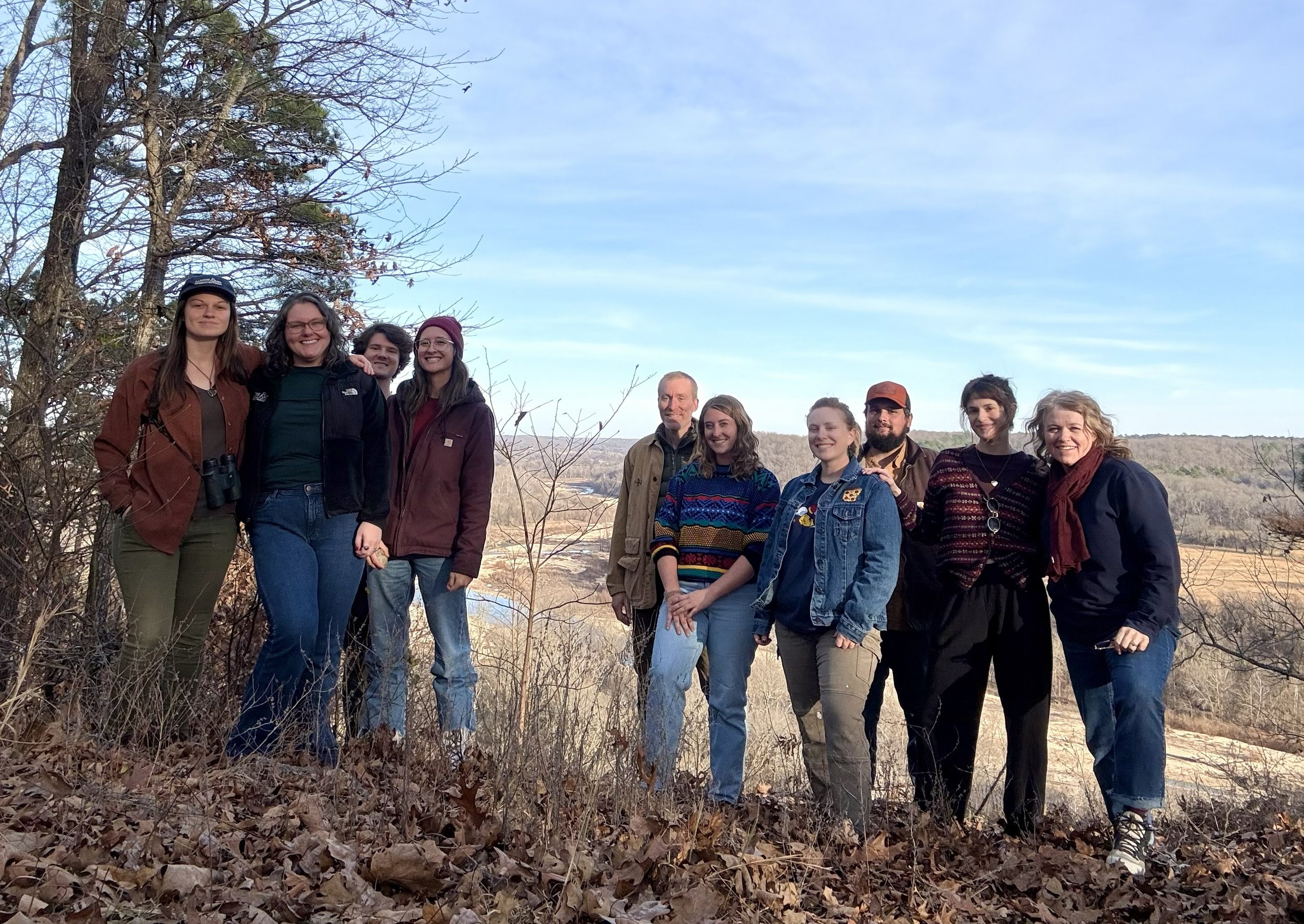
Learn about IRWP Staff
Learn more about the staff and Board of Directors that work to improve water quality for the Illinois River Watershed.
Our Mission
The Illinois River Watershed Partnership works to improve the integrity of the Illinois River Watershed through public education, outreach, and implementation of conservation and restoration practices throughout the watershed.
Our Vision
The Illinois River and its tributaries will be a fully functioning ecosystem, where ecological protection, conservation, and economically productive uses support diverse aquatic and riparian communities, meet all state and federal water quality standards, promote economic sustainability, and provide recreational opportunities.
Learn more about our work through Stewardship Stories
Visit our social media pages to stay in the loop!