
Register for this virtual webinar by clicking here.
Agricultural and urban expansion increasingly impacts water quality in the southeastern United States, yet comprehensive studies comparing agricultural watersheds to other land uses are relatively rare. Understanding these different impacts is critical for targeted watershed management and protection of drinking water resources, particularly for the growing population of nearly 500,000 people in Central Arkansas.
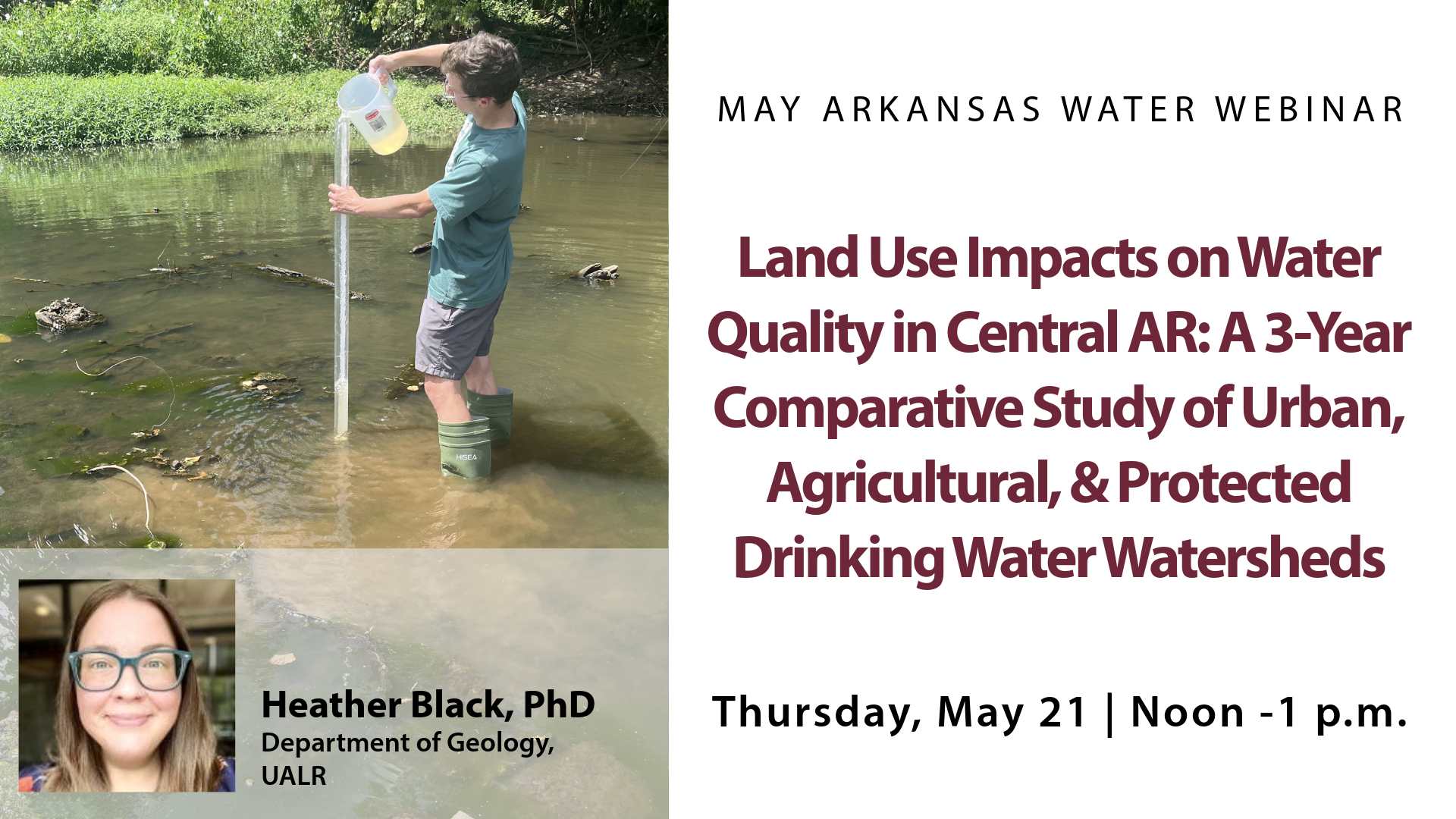
This study presents results from a three-year monitoring program comparing water quality across urban, agricultural, and protected drinking water watersheds in central Arkansas to quantify land use effects and identify priority management areas. Multiple sites were monitored bimonthly throughout the study period across three distinct watershed types in the Lower Arkansas River Basin: the Fourche Creek urban watershed, which filters the majority of Little Rock's stormwater through extensive bottomland hardwood wetlands; the Maumelle River protected drinking water watershed; and the Plum Bayou agricultural watershed.