Invasive Equipment Loaner Program
Invasive plants can be a big job to tackle - let’s do it together.
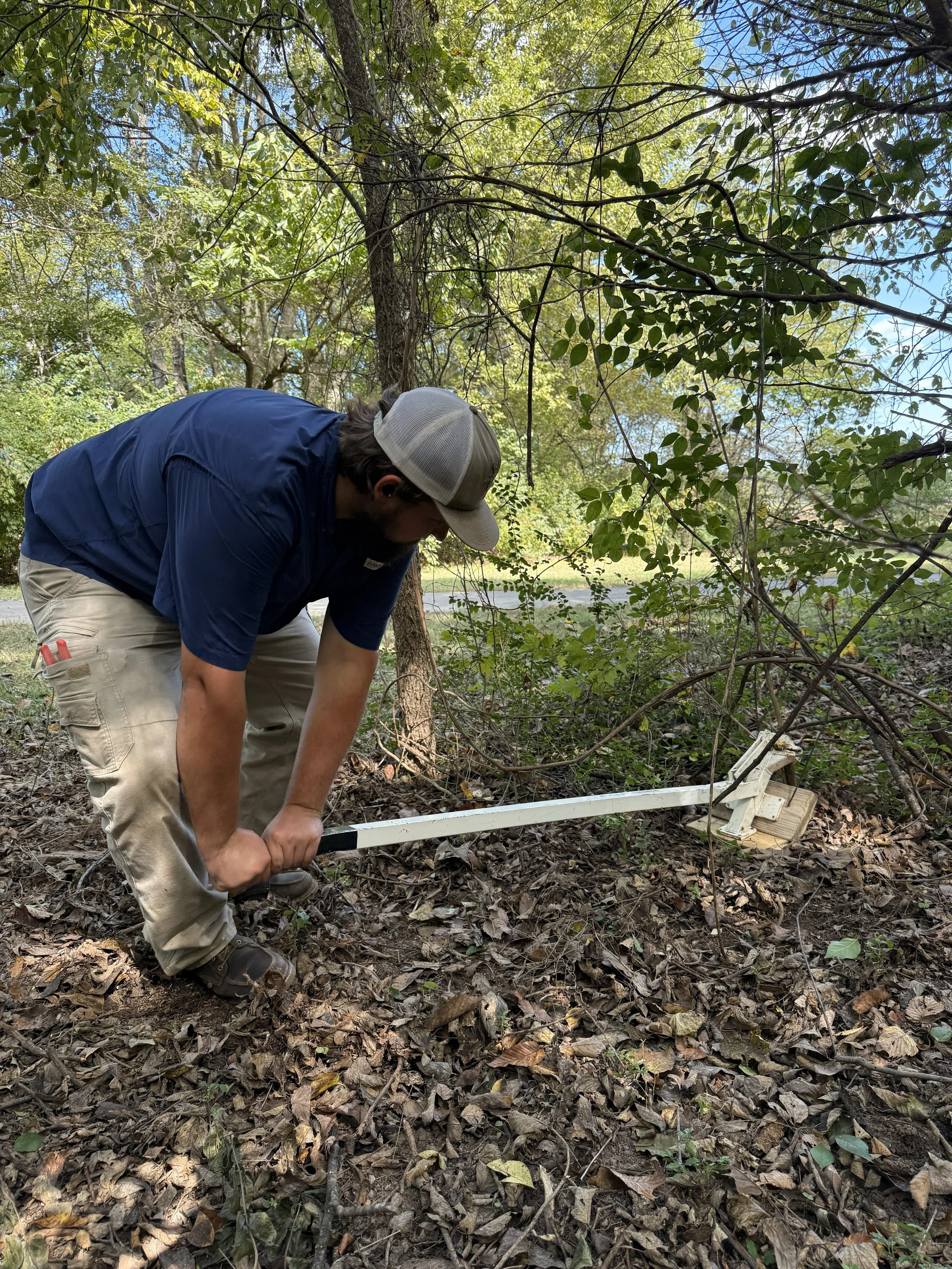
IRWP Restoration Fellow removing Bush Honeysuckle.
The Equipment Loaner Program can aid landowners and managers with the removal of invasive plants within the Illinois River Watershed.
Who is eligible to apply for the Equipment Loaner Program?
Individual landowners for private residential or agricultural properties
Public spaces (this includes schools, churches, POAs, and municipalities)
Businesses
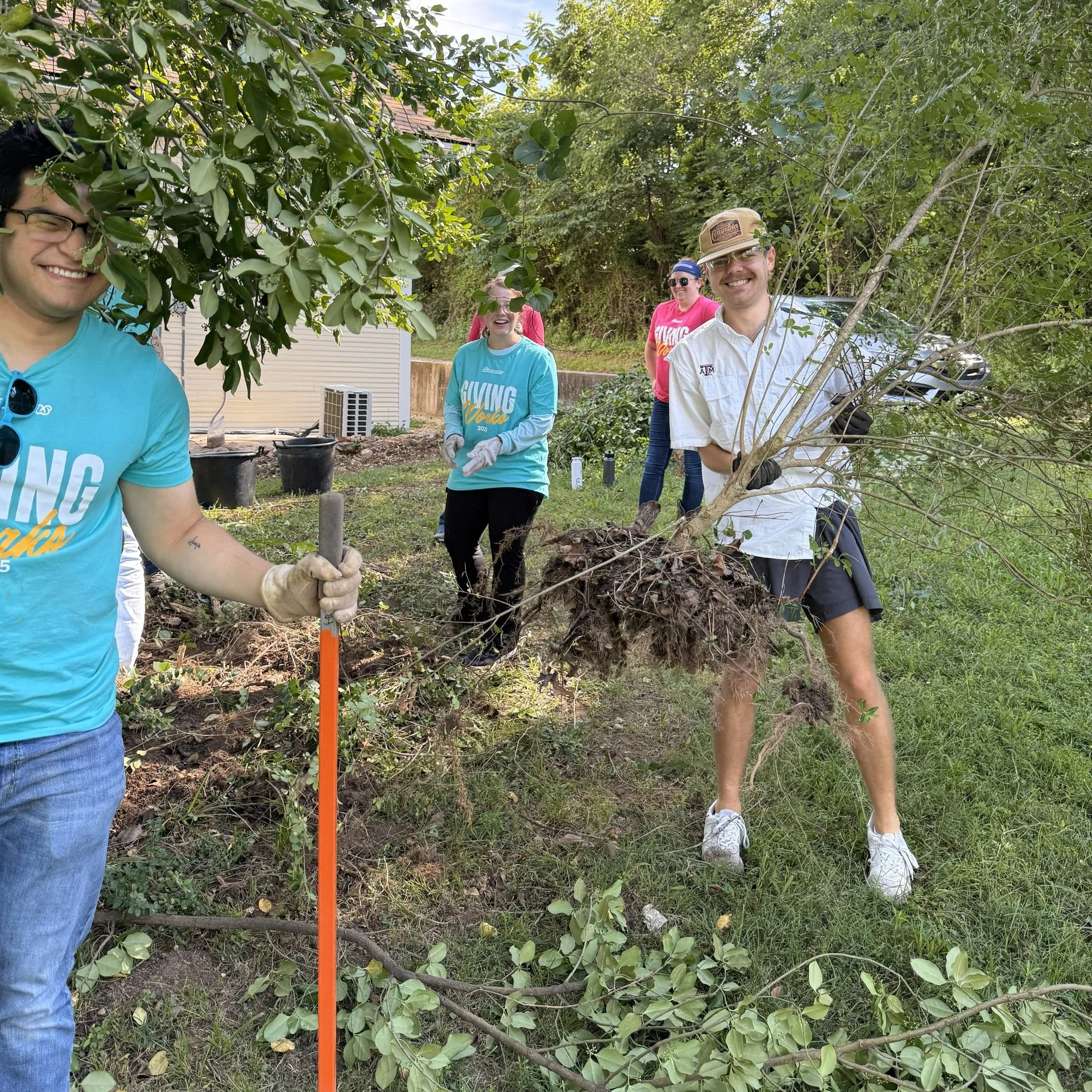
Simmons brought 80 volunteers to an invasive plant removal event in Cave Springs!
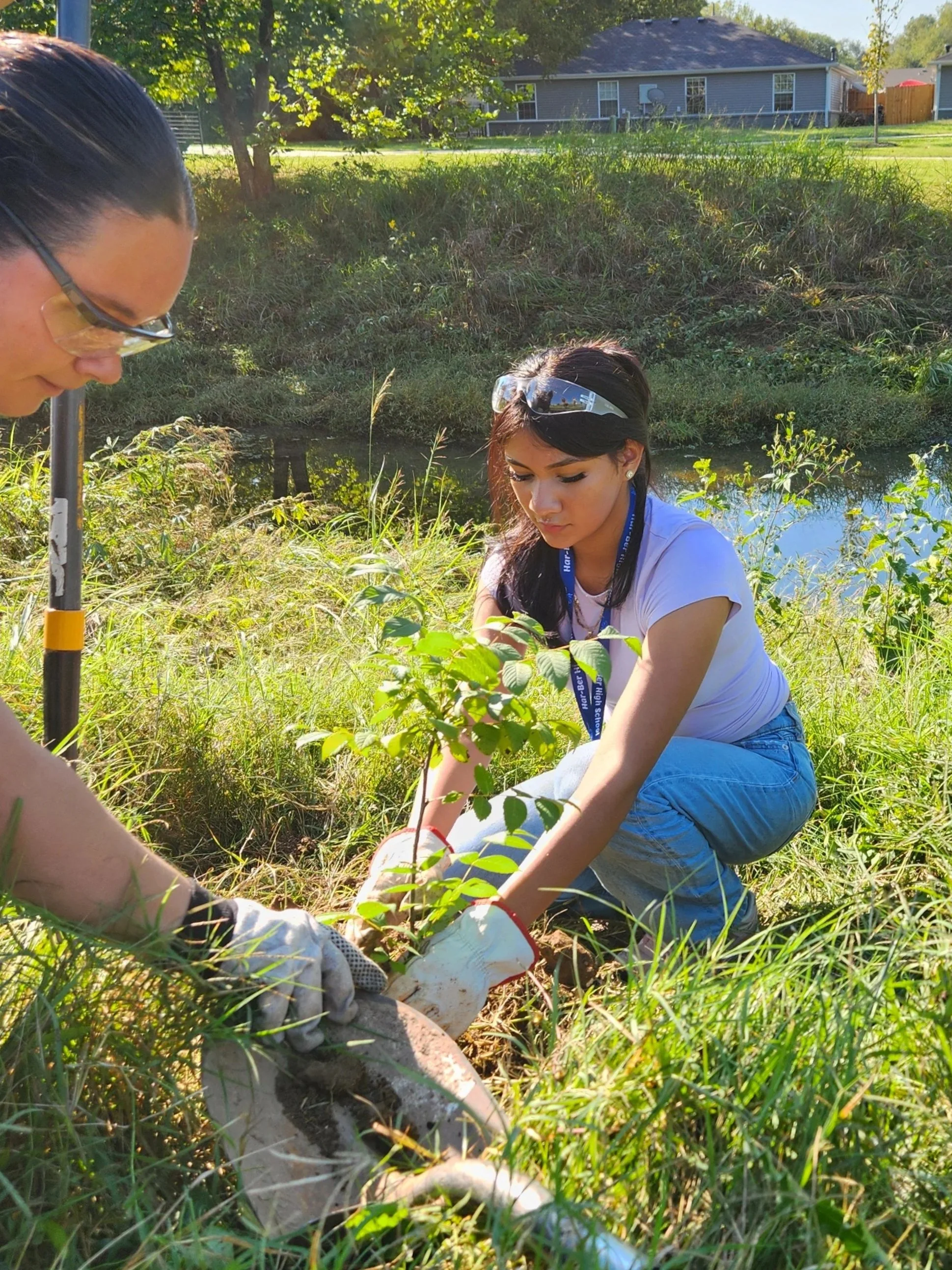
Har-Ber High School students planting native trees on Spring Creek in Springdale.
What are the requirements to apply?
The property must be located within the Illinois River Watershed. You can verify your property is in the Illinois River Watershed by looking it up on our web portal at IRWP GIS Portal.
IRWP staff must visit the property and develop a conservation plan. Our team will help identify invasive plants to be removed and provide recommendations for revegetation with native plants.
Get started on your restoration and make space for native vegetation!
Which invasive plants are targeting with this program?
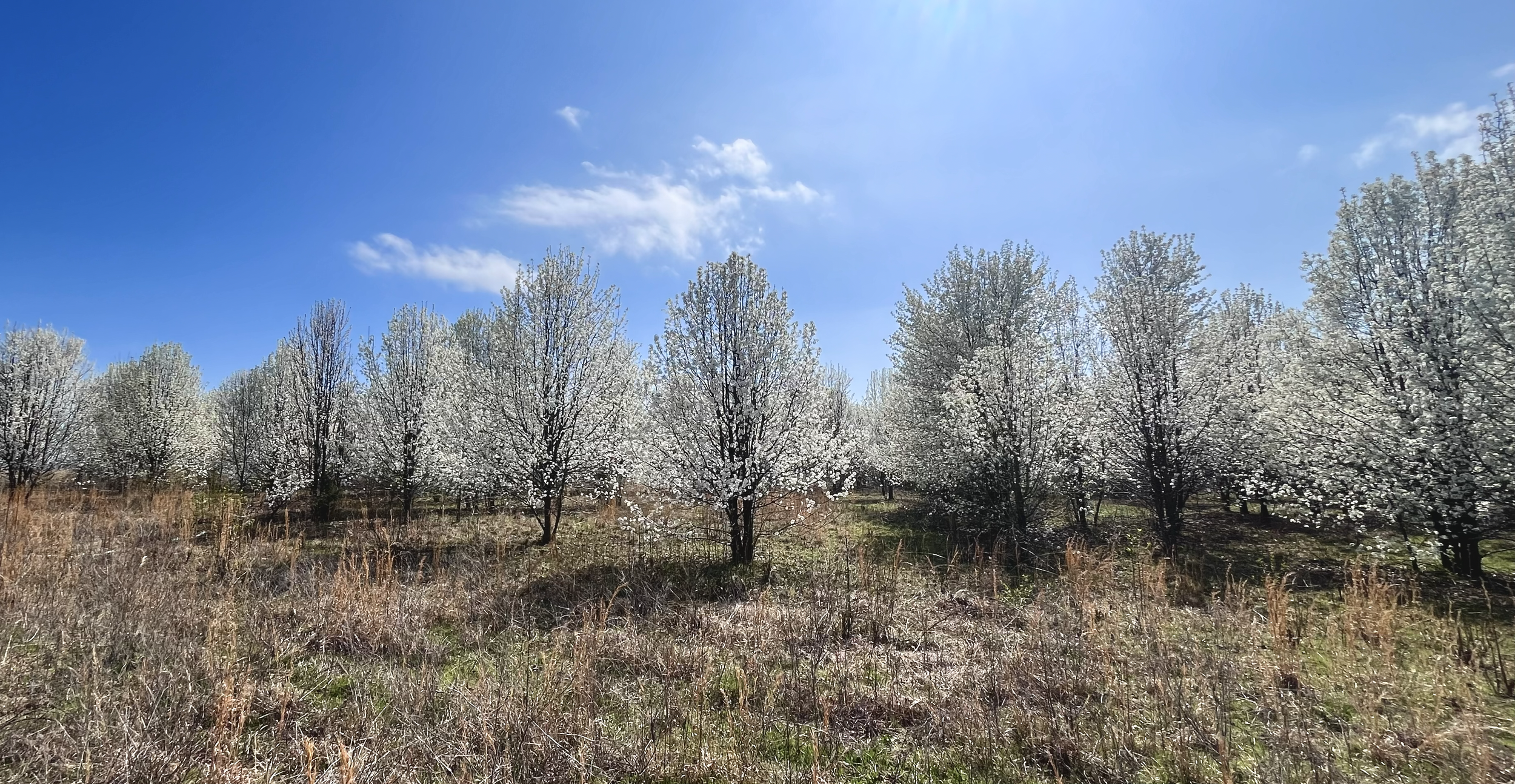
Callery or “Bradford” Pear Trees
Pyrus calleryana
-
Widely present in southern US. Invades forest edges, hillsides, fencerows, open fields, and rights-of-way disturbed areas.
-
Displaces native vegetation, prolific seeder dispersed by birds. Forms thickets and can sprout from roots. Prone to splitting in storms.
-
Deciduous, medium-sized tree, abundant white flowers blossom in early spring before most natives. Alternate “fruit” leaves oval turning red or orange in fall. Small pears in clusters.
-
Cut to stump in fall and apply 50% glyphosate immediately after cutting. Repeat seasonally.
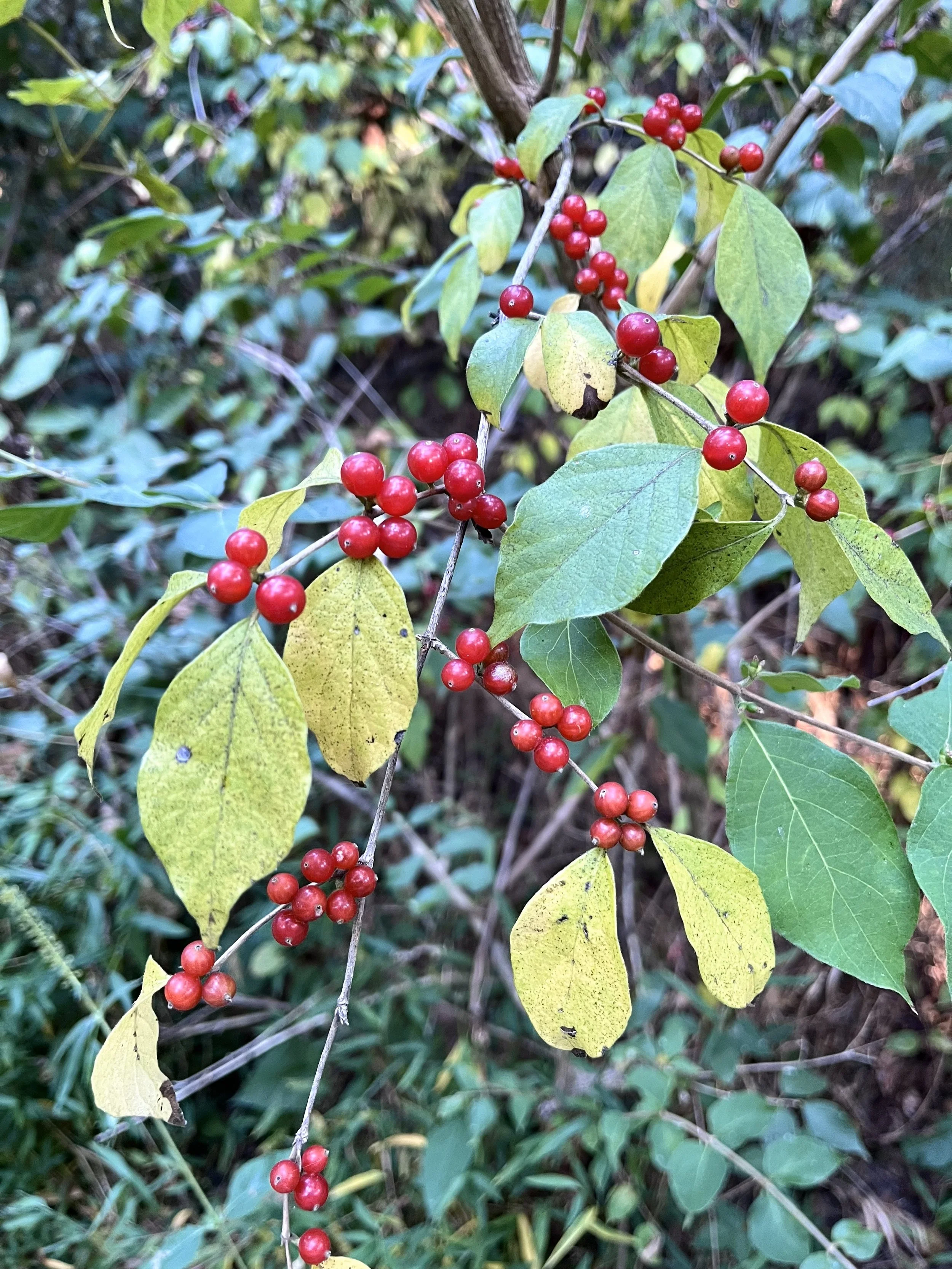
Bush Honeysuckle
Lonicera maackii
-
Widely present in southern US. Invades forest understory, fencerows, along streams, and rights-of-way.
-
Aggressive, shade-tolerant shrub that forms dense thickets, often creating monoculture preventing forest regeneration, especially in urban forest near where plants escaped or were planted. Poor wildlife food source.
-
Multi-stemmed shrub of the Olive family with opposite, glossy, oval, green leaves. Fragrant white flowers April to June produce abundant, green berry-like drupes turning dark purple. Propagates through seed spread by animals and is a prolific suckering plant.
-
Remove entire plant if possible. Cut to stump in fall and apply 50% glyphosate immediately after cutting. Repeat seasonally.
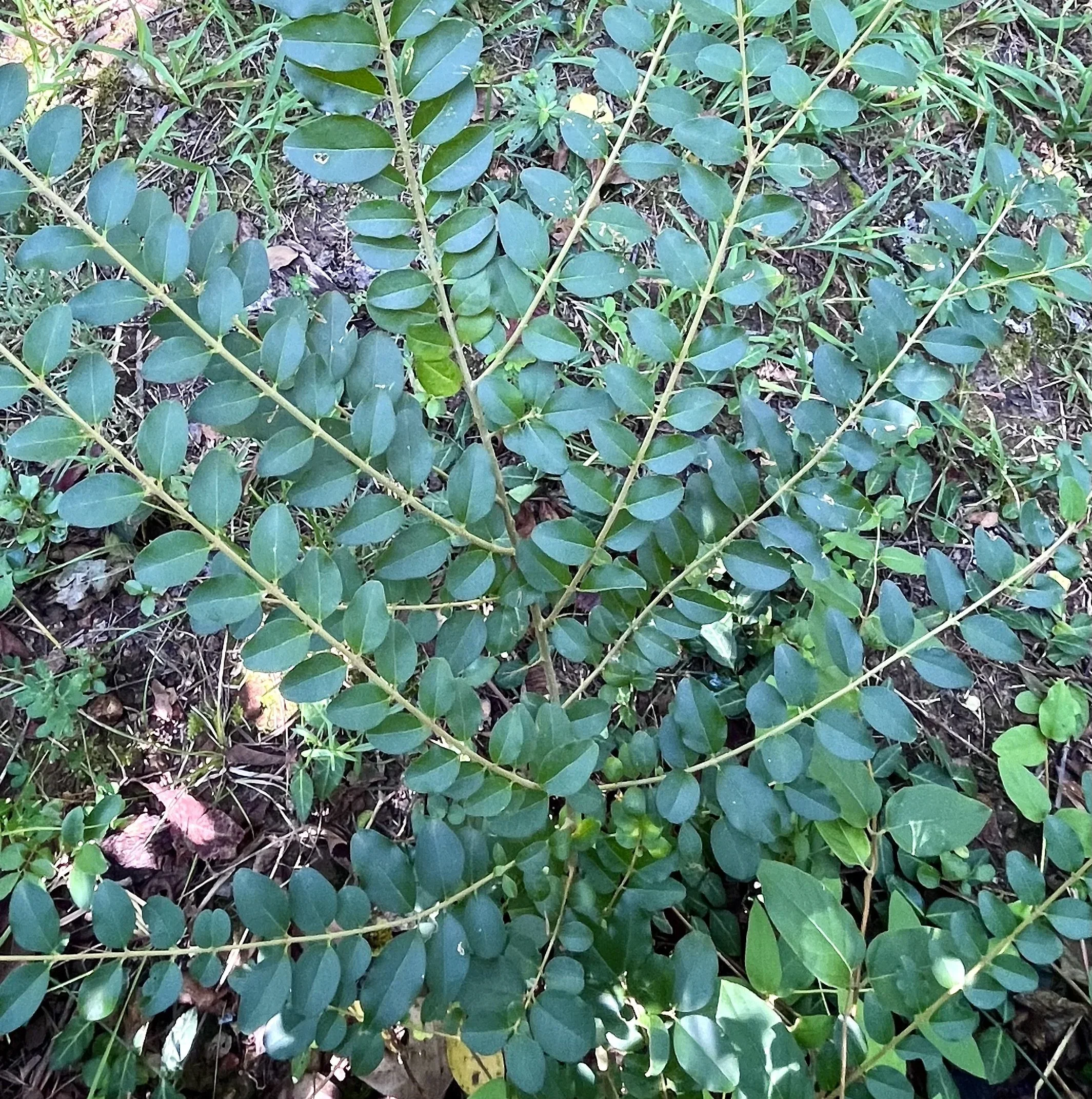
Chinese Privet
Ligustrum sinense
-
Widely present in southern US. Invades forest understory, fencerows, along streams, and rights-of-way.
-
Aggressive, shade-tolerant shrub that forms dense thickets, often creating monoculture preventing forest regeneration, especially in urban forest near where plants escaped or were planted. Poor wildlife food source. May contribute to increased tick populations.
-
Multi-stemmed upright shrub, bark light brown with striations, sometimes hollow. Opposite leaves ovate to oblong. Distinct sweet smelling white and yellow flowers in spring and summer produce glossy red berries when ripe.
-
Remove entire plant. Cut to stump in fall and apply 50% glyphosate immediately after cutting. Repeat seasonally until suckers are no longer present.
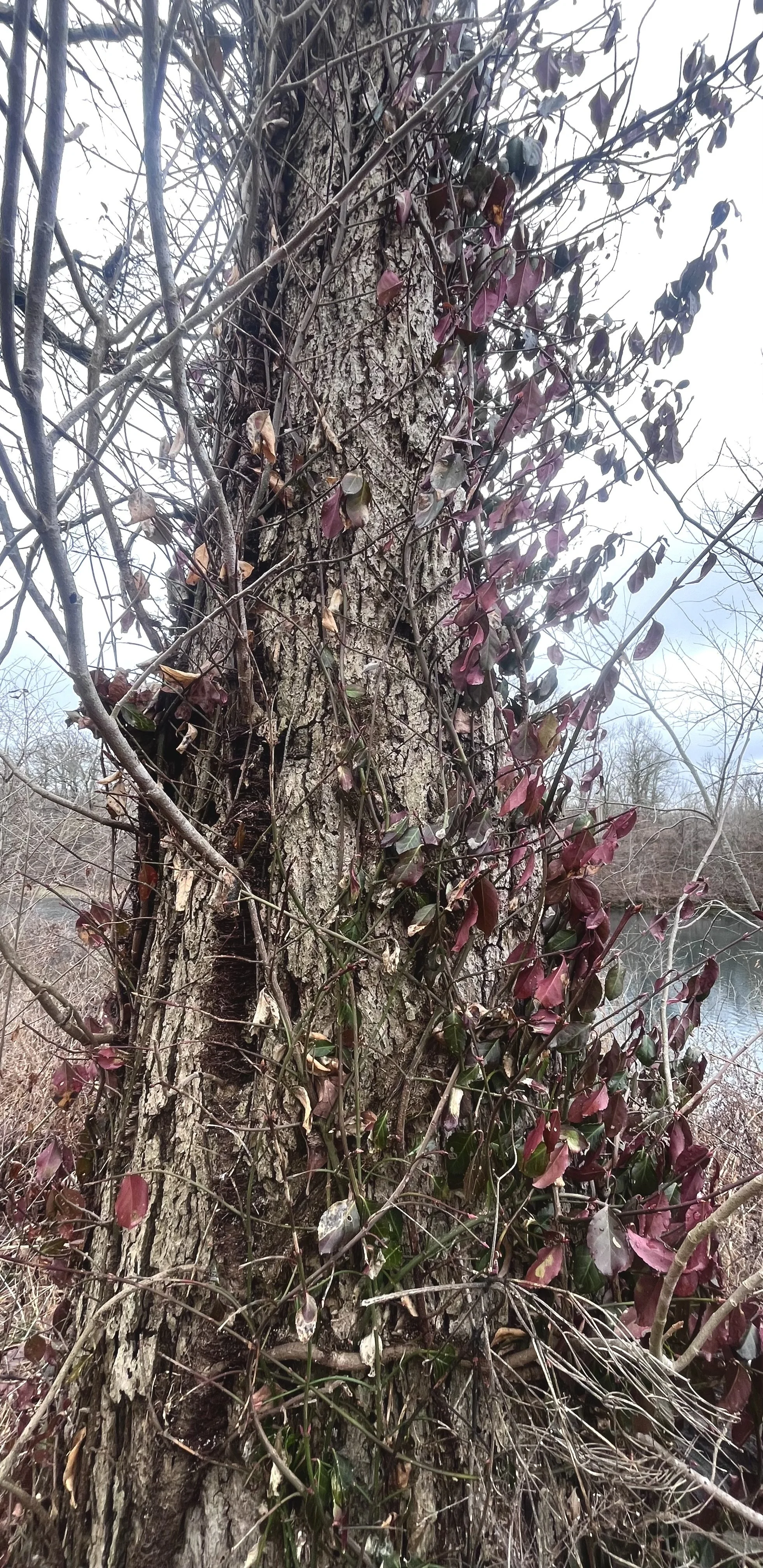
Wintercreeper
Euonymus fortunei
-
Eastern and southern US. Can be ground cover or climbing vines.
-
Adaptable, aggressive, vine that forms dense groundcover or climbs structures including trees, which may be choked. The vine will completely cover large areas of forest floor and out-compete native plants. Fruit spread by birds. Weight can eventually topple trees and fences.
-
Evergreen woody vine forming numerous clinging stems. Opposite, oval, glossy green leaves with prominent veins. Inconspicuous flowers produce small red capsules at the end of y-shaped stems that split, exposing seeds.
-
Cut stump and apply appropriate herbicide. Late winter treatment will avoid non-target damage. Repeated treatments likely. Hand pull small infestations.
Caution: wintercreeper attached to a tree may transfer herbicide to the tree.
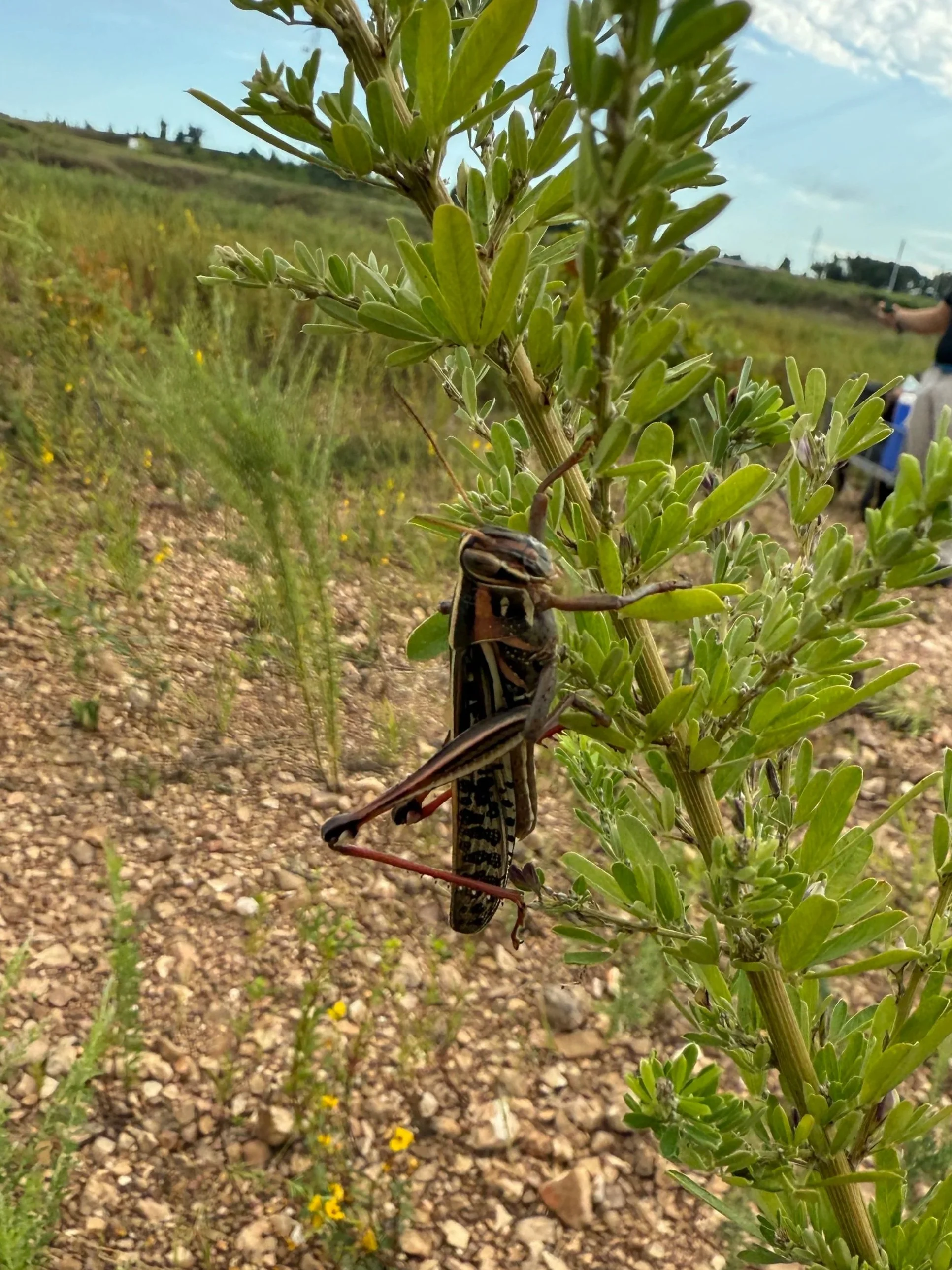
Sericea lespedeza
Lespedeza cuneata
-
Widely present in southern US. Introduced from Asia in 1800s. Aggressive invader and seed producer. Invades pastures, fencerows, open areas, roadsides, disturbed sites, rights-of-way.
-
Outcompetes native vegetation. Major pasture weed issue. Seeds remain viable for many years.
-
Upright, slender forb with many alternate leaves. Small white flower clusters in the summer. Resembles alfalfa from distance.
-
Consistent mowing across years; burning. Foliar chemical applications effective before seed set.
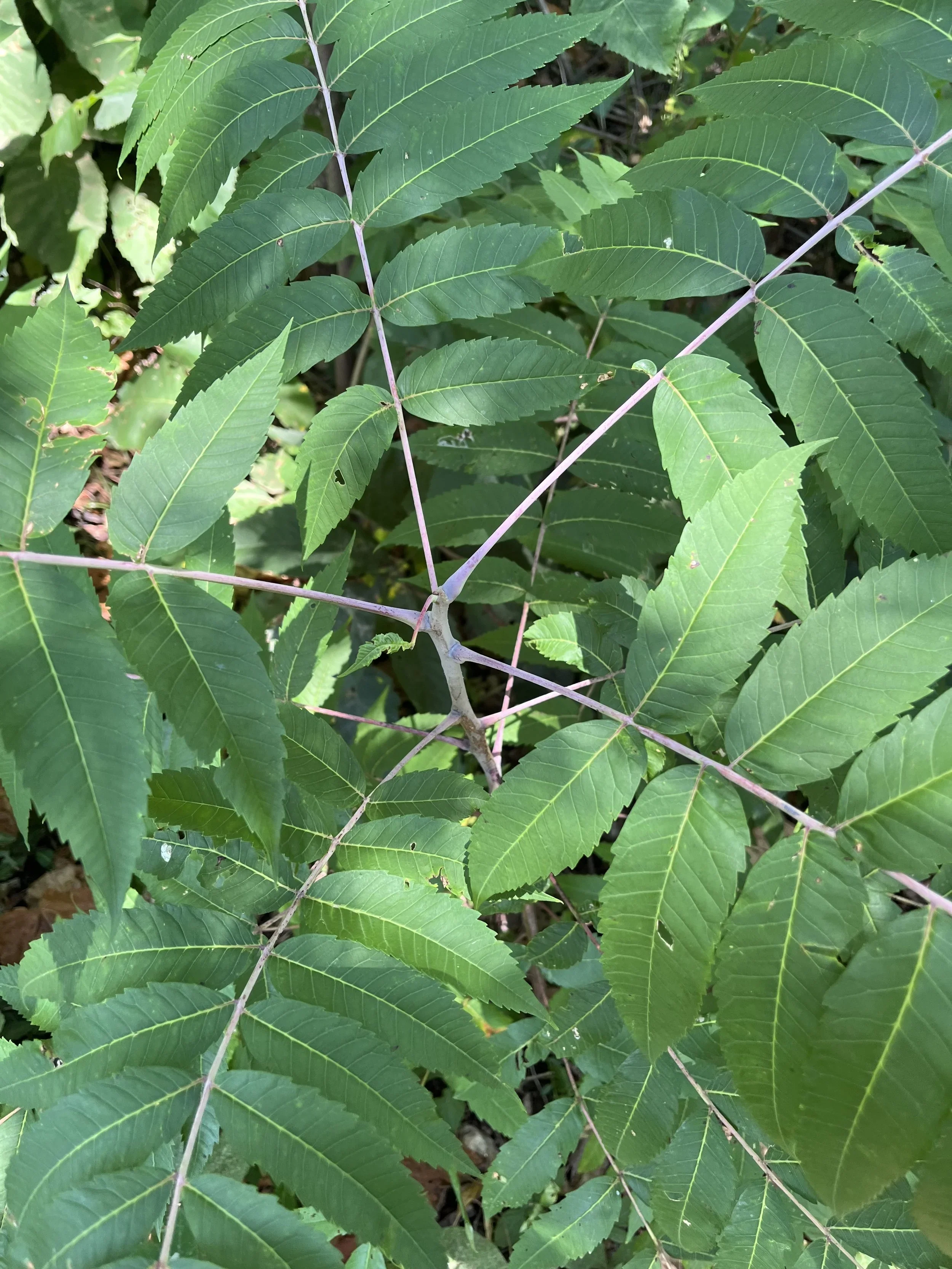
Tree-of-heaven
Ailanthus altissima
-
Present in most lower 48 states, listed as noxious or banned in some areas. Well established in Northwest Arkansas. Can be found along forest edges, disturbed and undisturbed sites. Large groves have been reported along HWY 71 in the Ozark National Forest.
-
Rapidly growing tree that forms dense thickets and suckers from roots. Prolific seeder spread by wind. Leaf litter and roots also produce allelopaths or toxins that prevent germination of other plants.
-
Tall deciduous tree with shallow roots. Mature trees often lack lower branches. Alternate, pinnately compound green leaves with reddish stems near new growth. Circular glands under leaf base. Brown to tan bark. Wing-shaped seed clusters resemble maple fruits. Unpleasant odor when crushed. Resembles hickory, walnut, sumac.
-
Remove entire seedlings; basal bark method or frill application during mid-to-late summer for more mature plants. Do not use cut-stump as it will encourage suckering.
Acknowledgement of Risks and Release of Liability
By voluntarily participating in an invasive plant removal event or loaning invasive plant removal equipment, you are acknowledging the inherent risks associated with your involvement and by doing so accepting any and all risks. You are agreeing to release the Illinois River Watershed Partnership (IRWP), the Board of Directors, and all staff or partners from any and all responsibility and liability from any accident, injury, death, or loss, whatsoever, that may result during or in connection with your participation. This acceptance and release of liability includes, but is not limited to, activities you choose to do such as hiking along the bank of the creek/stream and/or roadway, walking through brush, wading in a flowing stream, or other. You agree to take no action against the released parties because of any error, omission, accident, mishap, negligence or willful misconduct arising out of or in connection with your voluntary use of the information on this page.