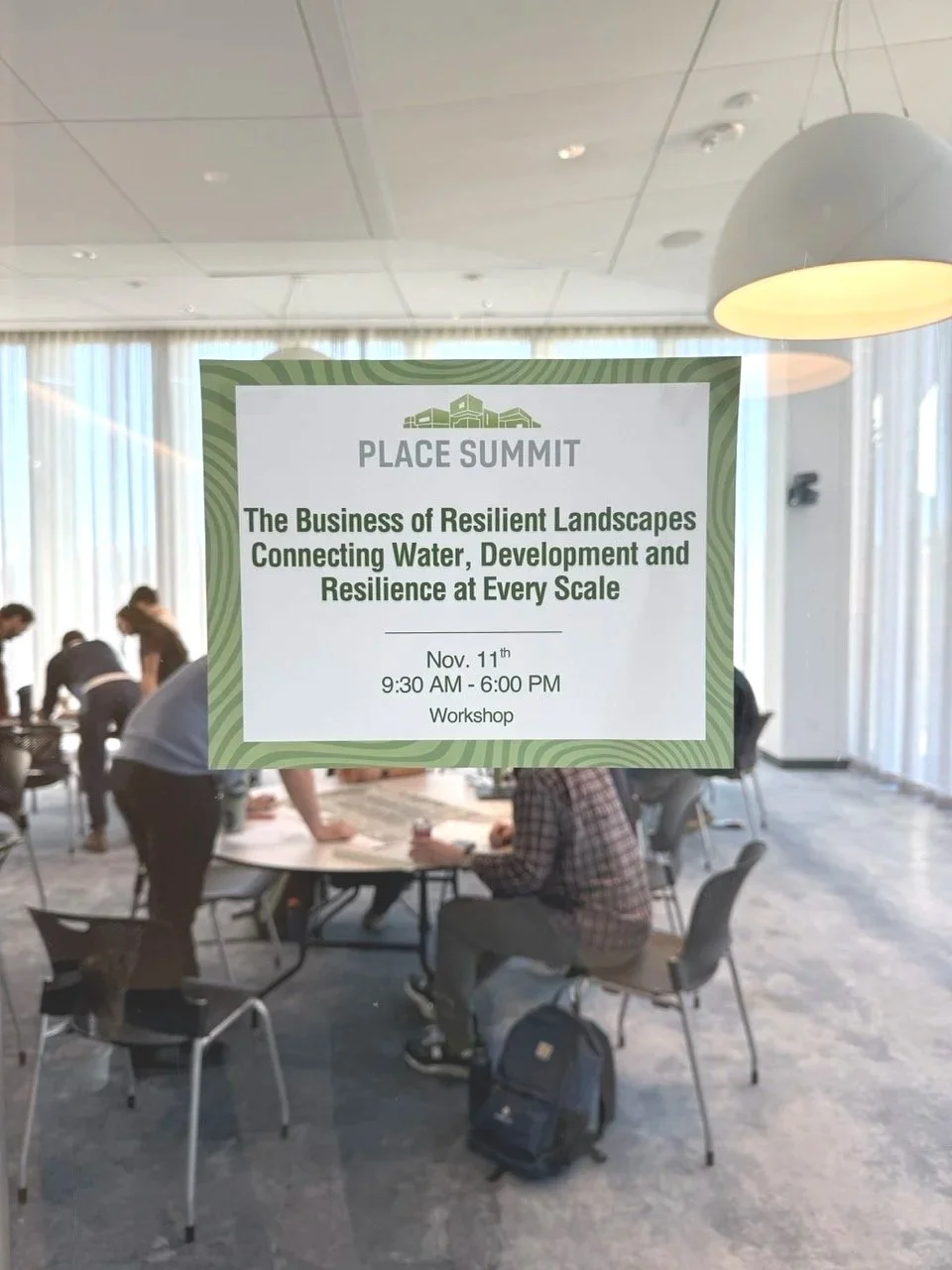
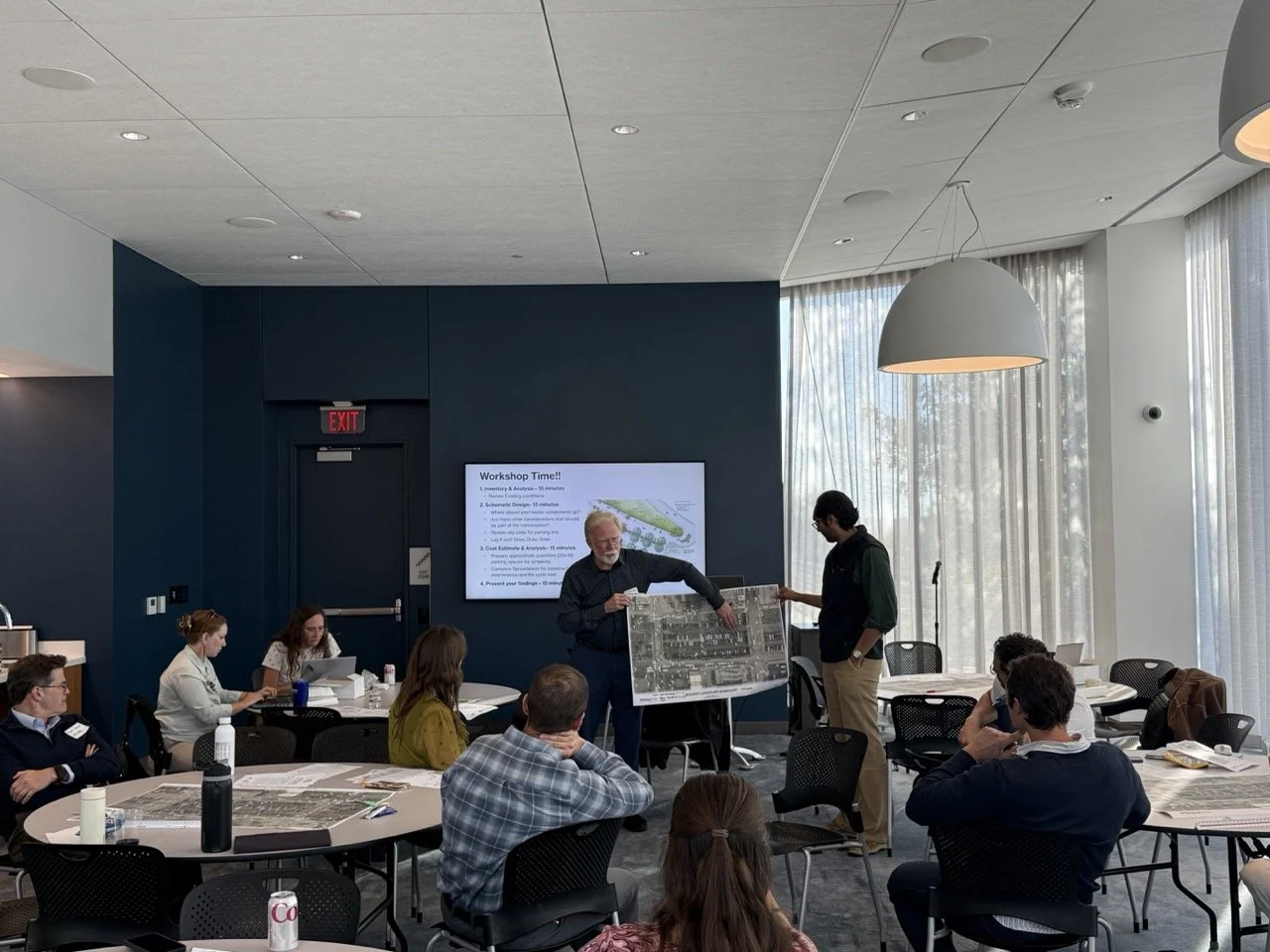
IRWP teamed up with PRISM Design Studio to host “The Business of Resilient Landscapes,” a full-day workshop on the November 11th, the opening day of the 2026 Place Summit, hosted by ULI Northwest Arkansas.
IRWP’s Morgan Keeling kicked things off with a look at placemaking through a watershed lens, using Model My Watershed and leading a discussion on the challenges facing the Illinois River Watershed. (Link to Morgan’s Slides) Our water story is closely connected: much of the region drinks from Beaver Lake, and that water returns to the Illinois River as treated wastewater. What leaves our watershed doesn’t stop at the state line: It flows on to the Arkansas and Mississippi Rivers and into the Gulf. Closer to home, IRWP’s 2025 assessment of 23 stream sites showed Oklahoma streams scoring healthier than Arkansas streams, with phosphorus above the standard at nearly every site and bacteria a real concern in Arkansas subwatersheds. The lesson from the data is simple: keep soil and nutrients on the land.
That is getting harder as the region grows. Our karst geology means surface water and groundwater are closely tied, rainfall is increasing, and NWA is projected to reach 1 million people by 2045, which means half of what will be built here hasn’t been built yet. Aerial photos of one stream from 1996 to 2020 showed what that does over time: wider, sandier, more eroded channels. Standard detention ponds slow some of that water, but they treat only a small share of storms and do little to clean runoff, extending the amount of time flows are erosive on the receiving channel.
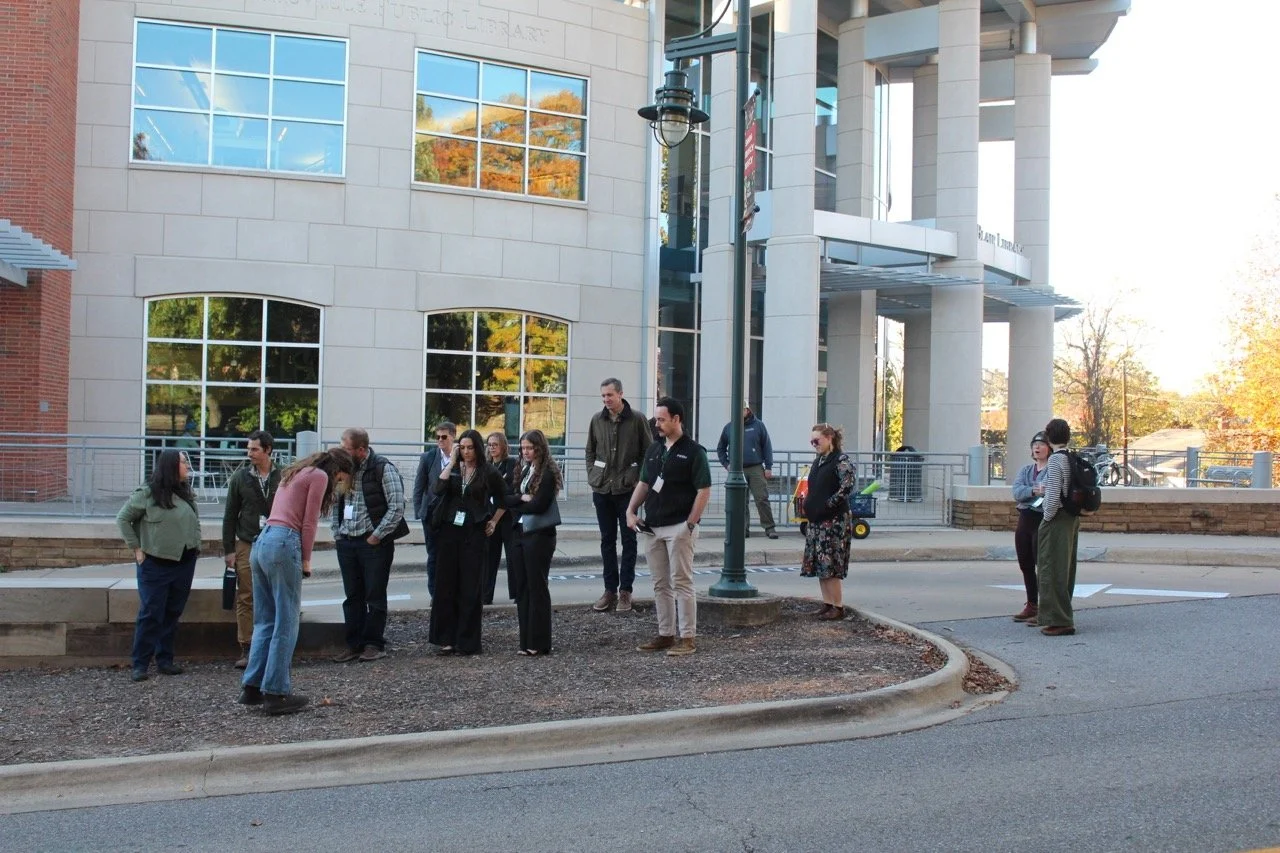
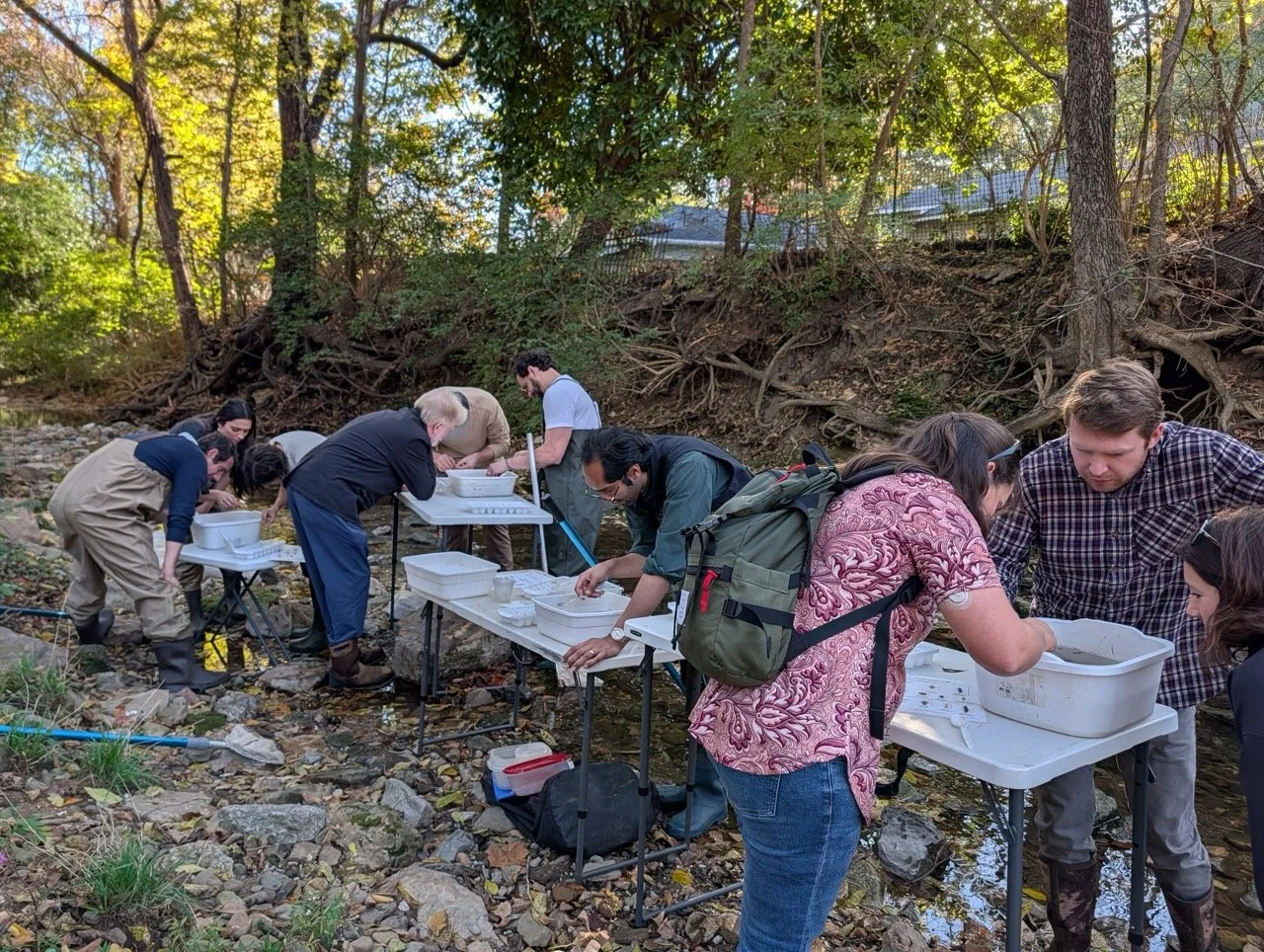
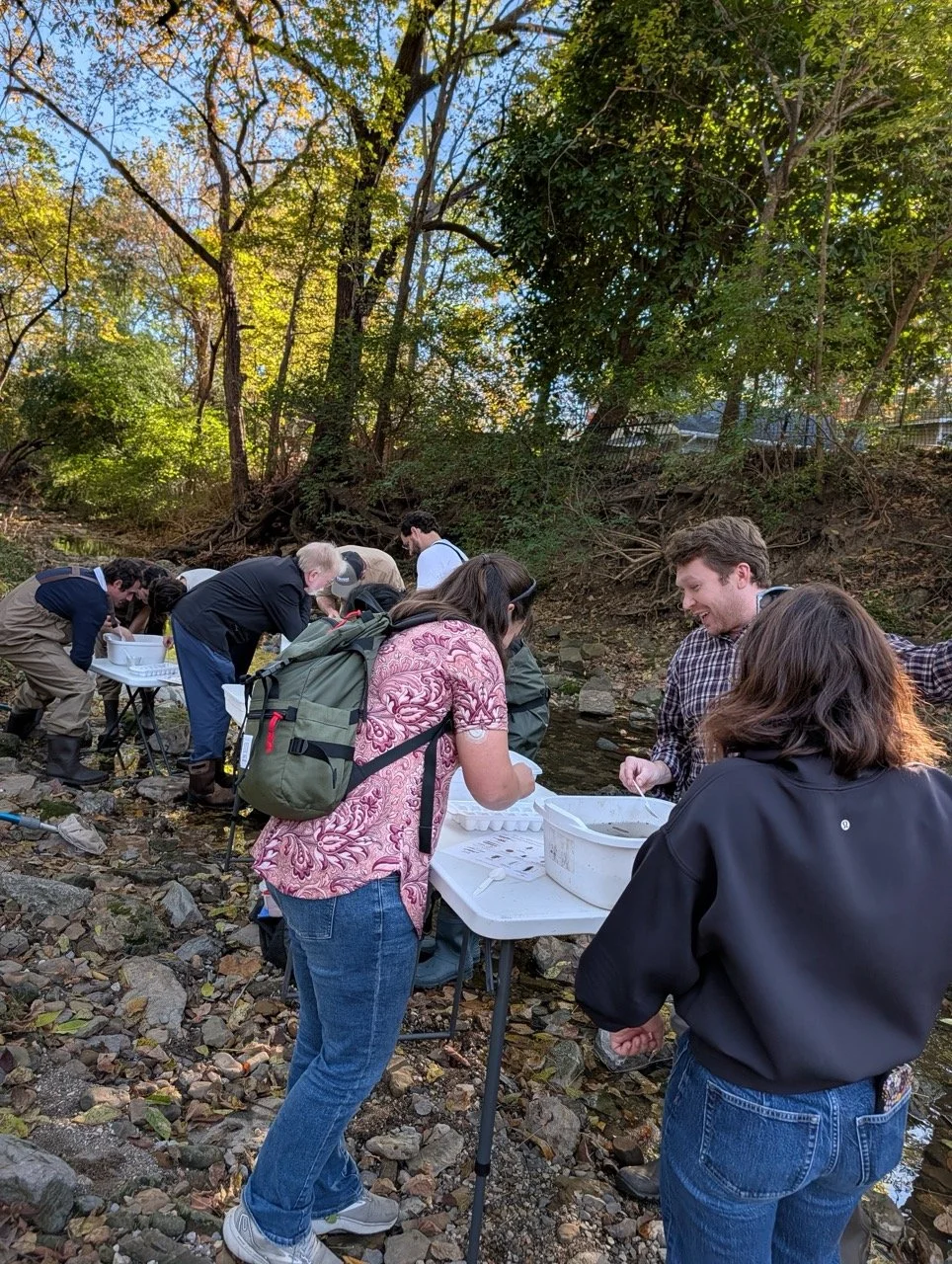
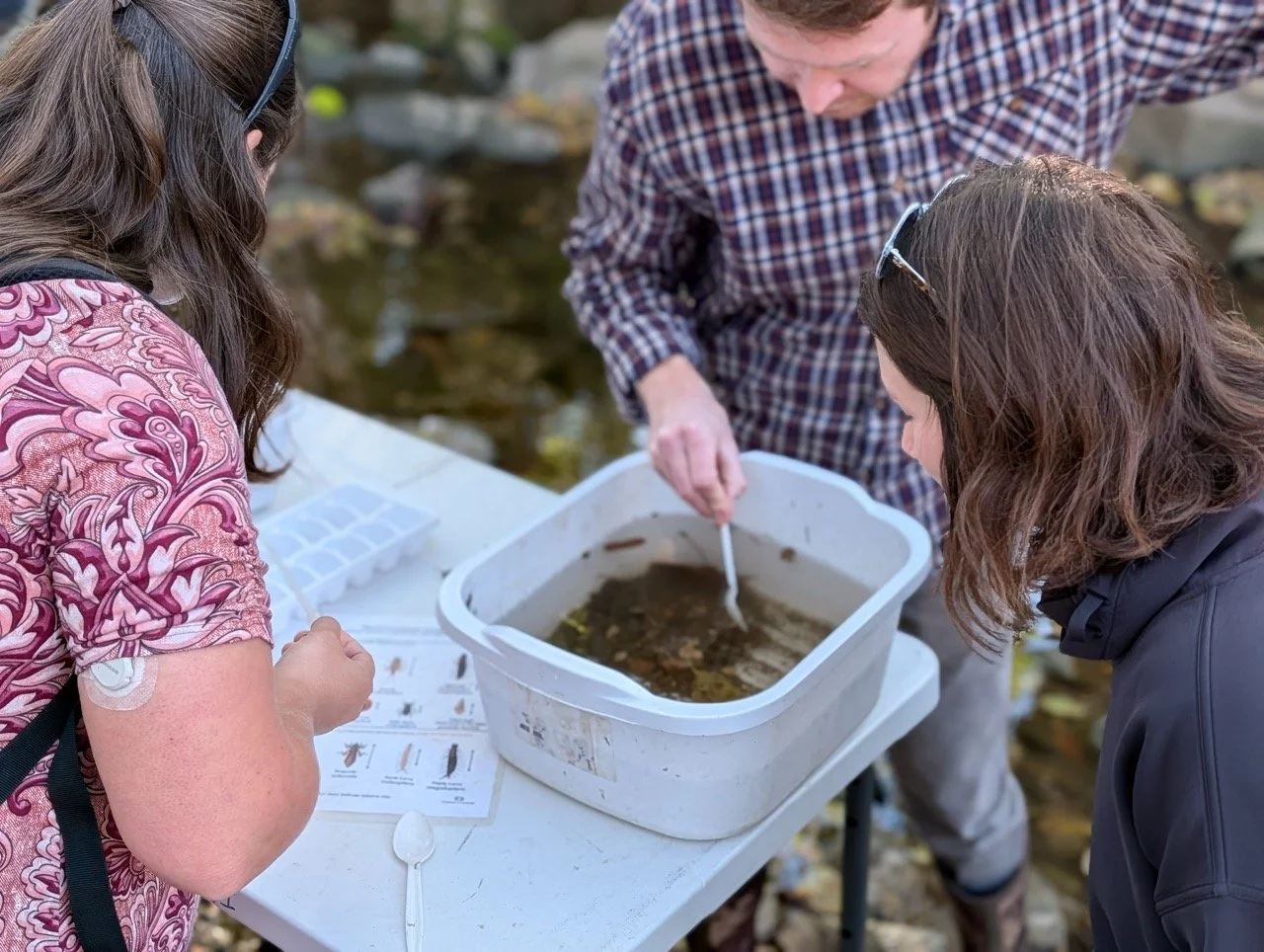
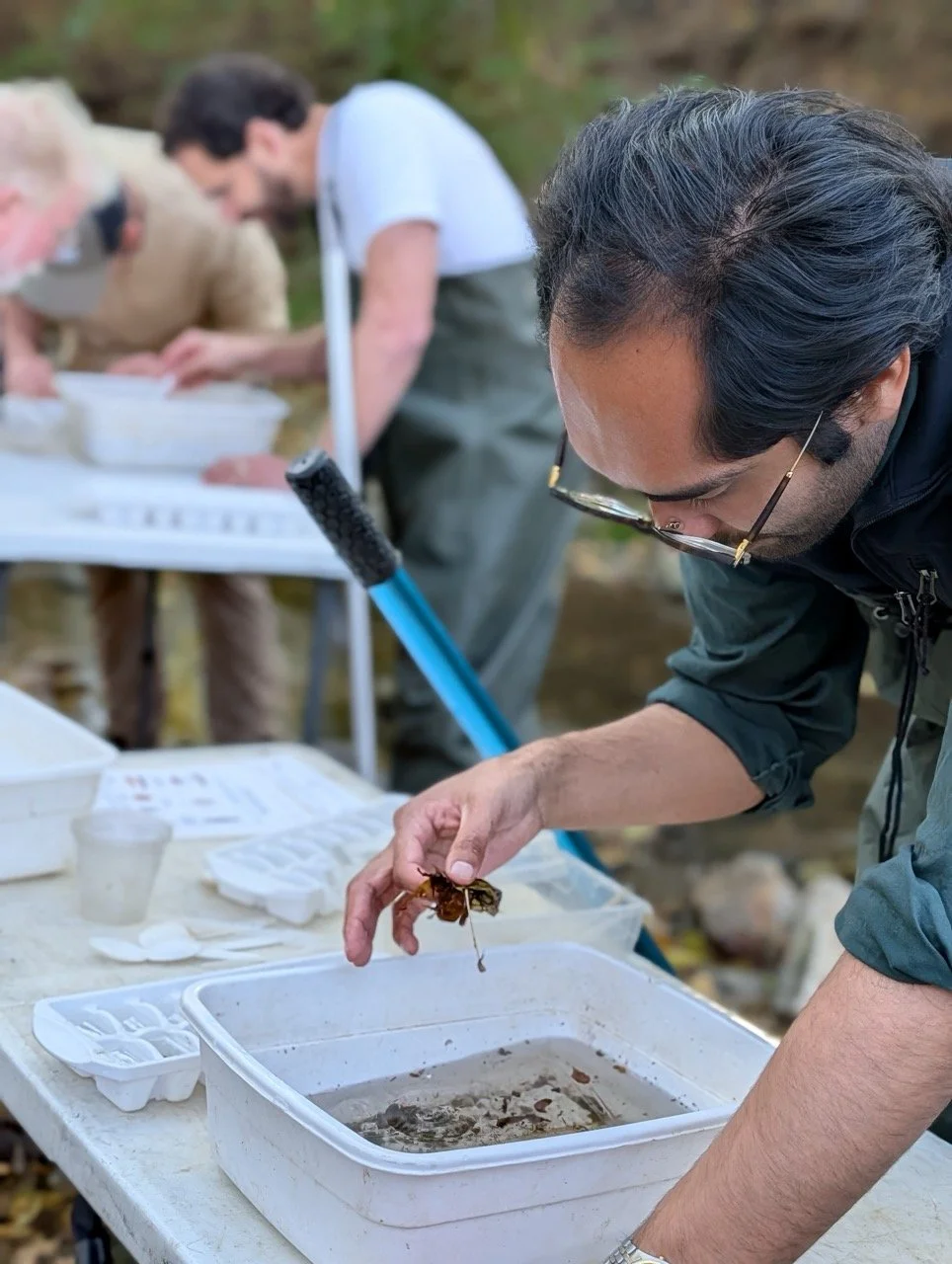
Suzanne Murphy leads Place Summit attendees on a “bug kicking” or macro-invertebrate indexing adventure.
Rain gardens, riparian buffers and permeable pavement all measurably cut sediment, nutrients and E. coli, and places like Osage Park in Bentonville show how stormwater design can become a community asset. Morgan encouraged attendees to “think outside the grass” with native plants, and to plan stormwater as a connected network that protects floodplains, keeps 100-foot stream buffers and links green space across the region. (Link to Green Infrastructure Resource)
PRISM’s Spencer Sanders and Jon Raney then led two sessions with special guests Wade Tomlinson of the City of Bentonville and Cory Amos of Specialized Real Estate. The first session explored the many demands placed on parks and green spaces, and the benefits they return when we plan for and invest in them; the second focused on high-performance landscapes in urban development.
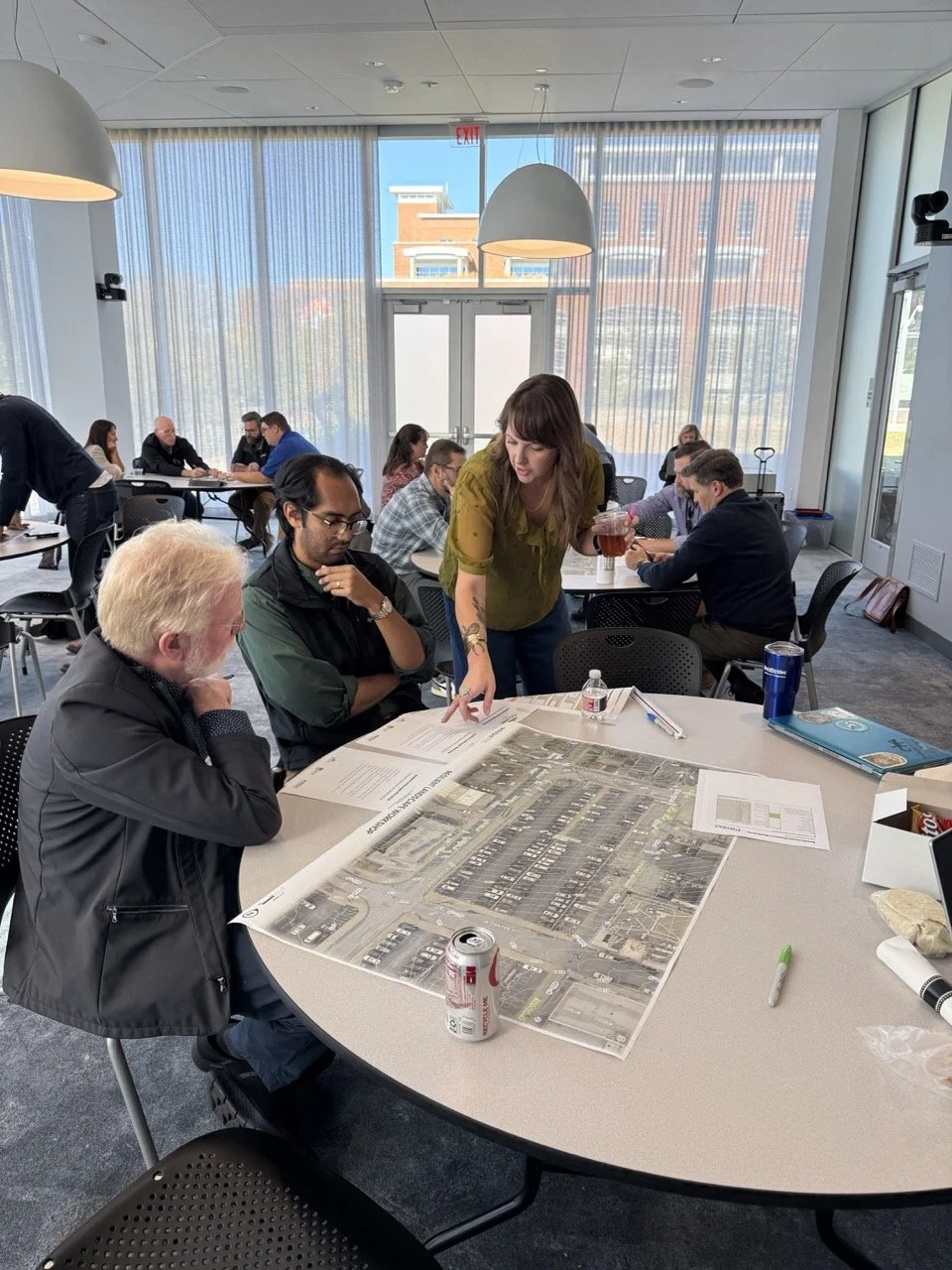
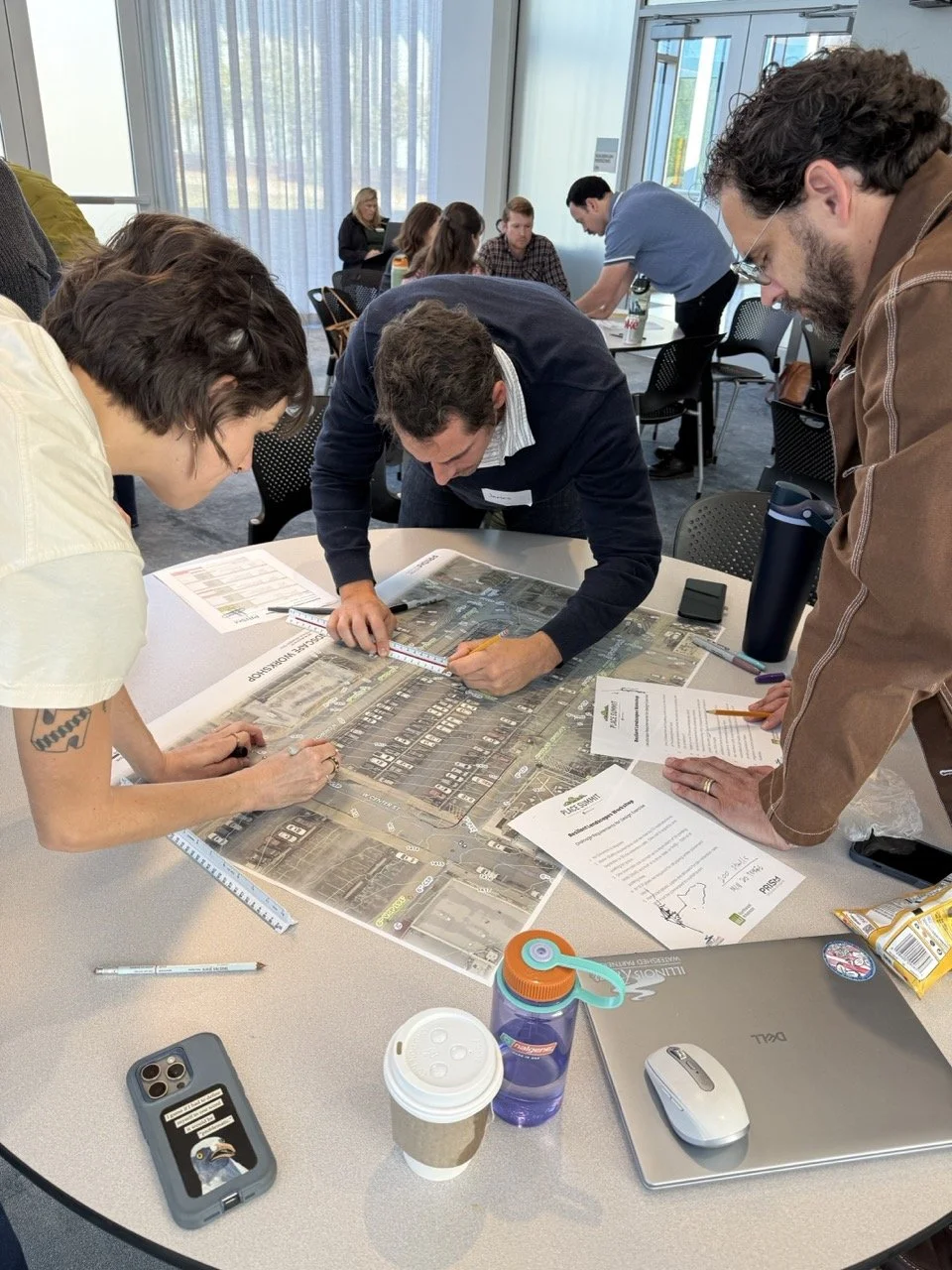
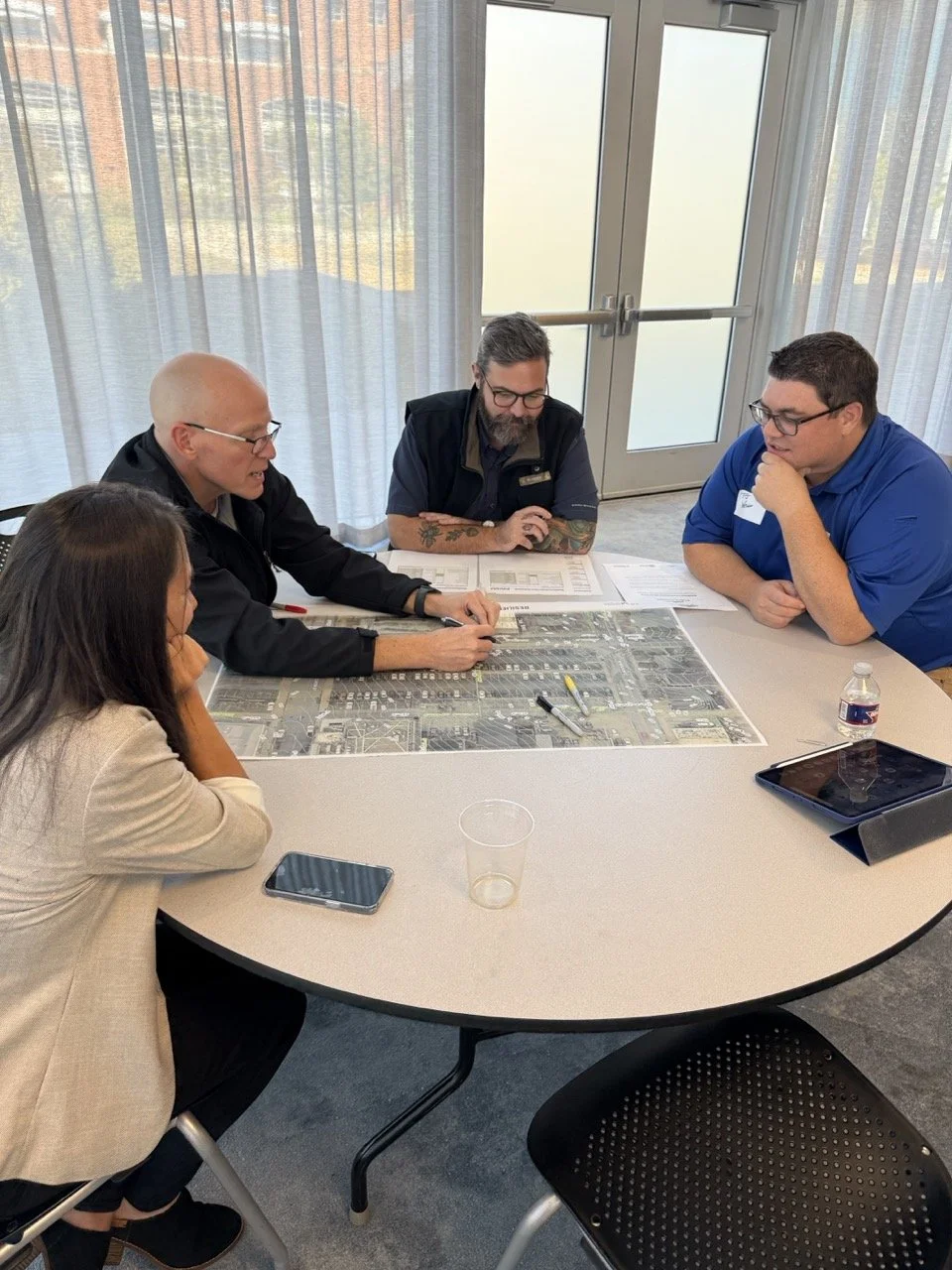
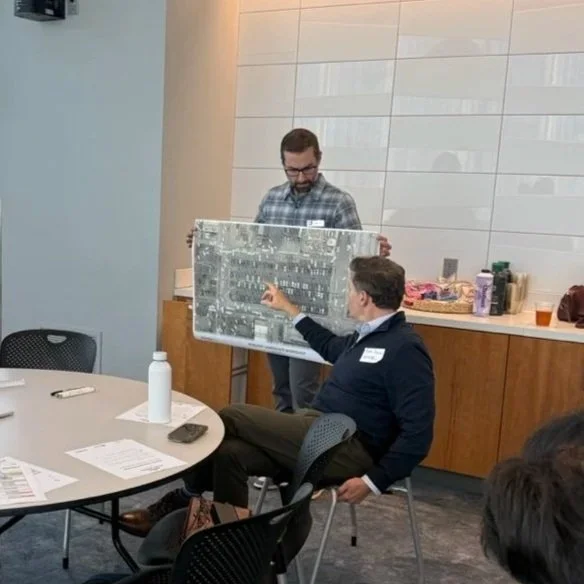
Next, PRISM’s Jenny Burbidge challenged participants to redesign a Fayetteville parking lot to meet stormwater criteria using either traditional gray infrastructure or green infrastructure. The takeaway? When costs were analyzed over time, gray infrastructure carried a much higher maintenance price tag while delivering fewer stormwater and ecosystem benefits.
And, for a memorable close to the day -- IRWP’s Suzanne Murphy lead participants into Tanglewood Branch in the Ramble to see the real-world results of resilient urban landscapes up close, sampling benthic macroinvertebrates. If you’ve followed us for a while, you know these small aquatic “bugs” help us estimate water quality based on which types are present and how many we find.
To learn more about the results of IRWP’s assessments visit: https://www.irwp.org/water-quality-monitoring
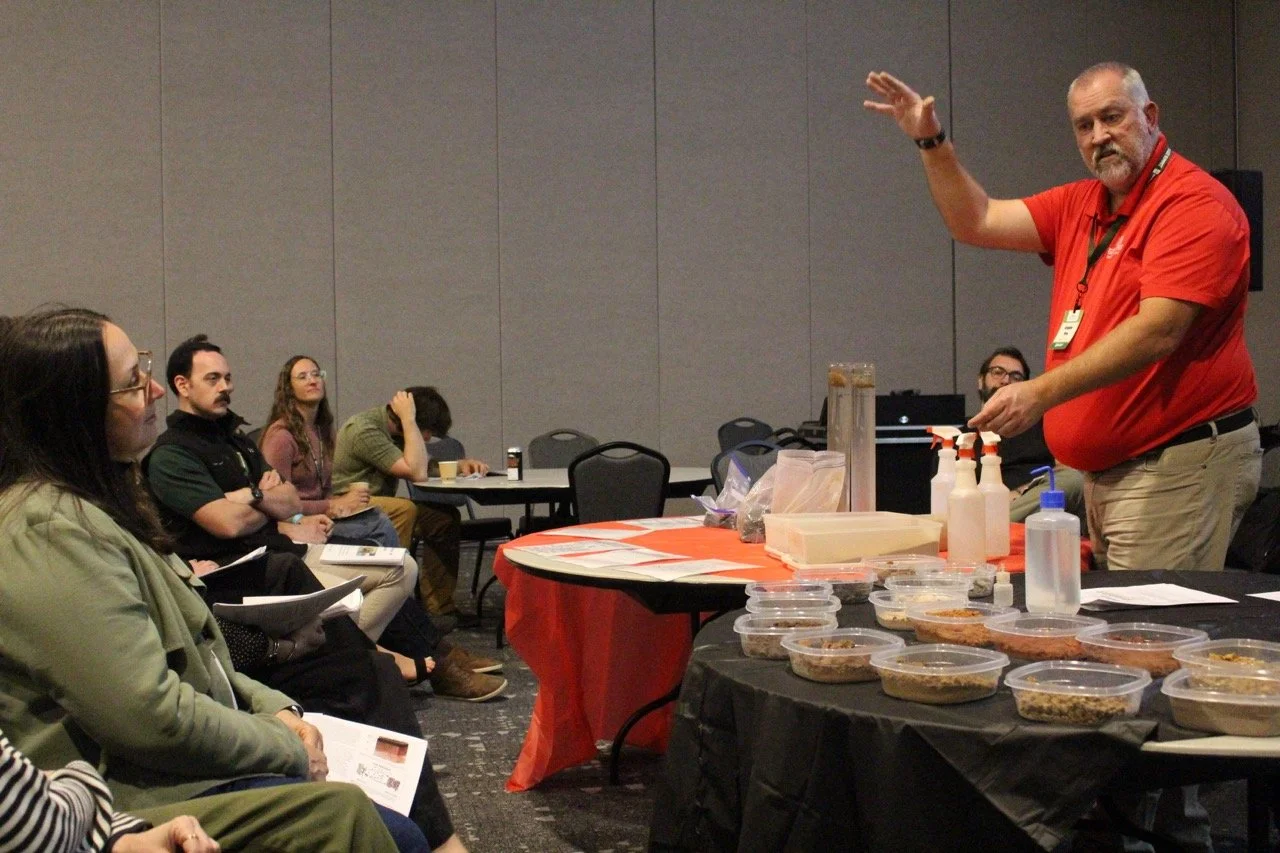
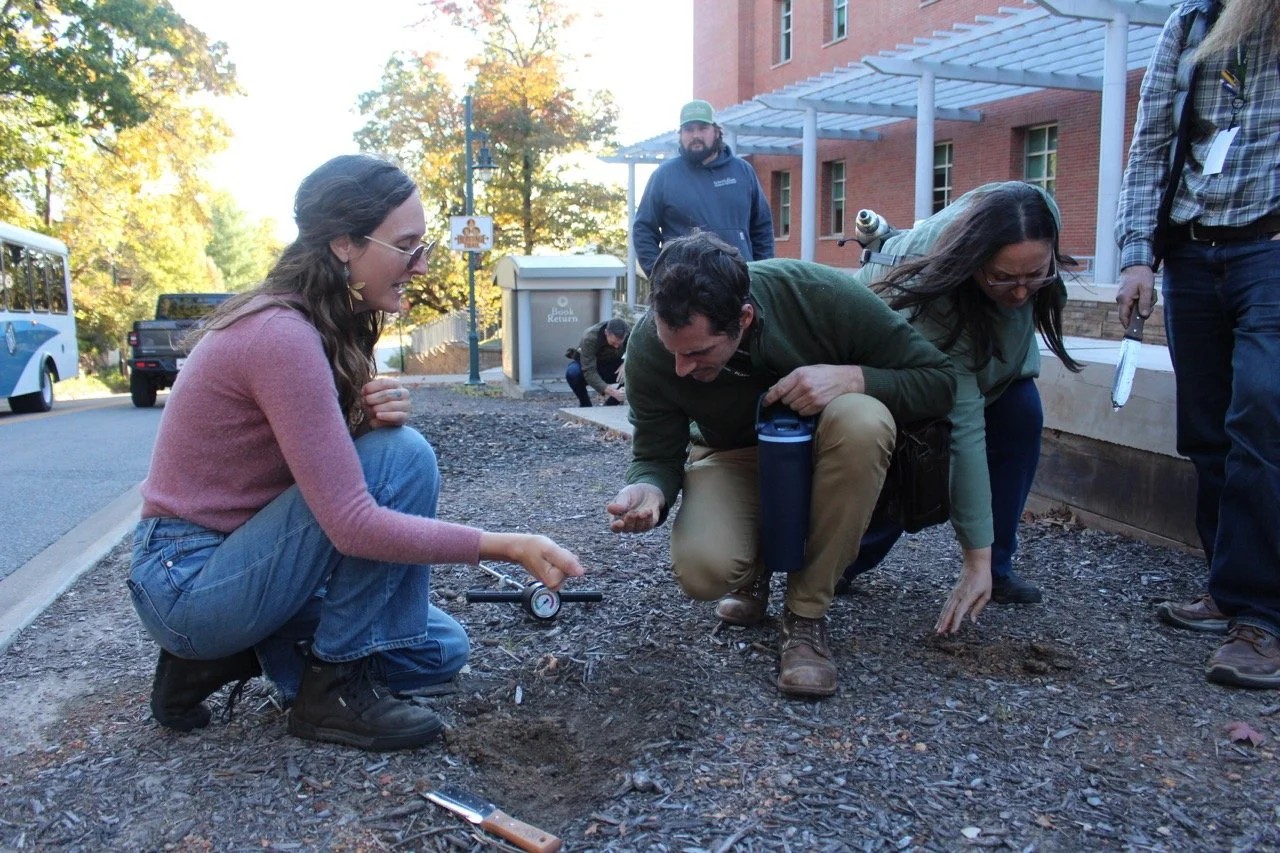
Dr. Kristofor Brye and Dr. Diego Della Lunga taught the tour group about soil types and attributes.
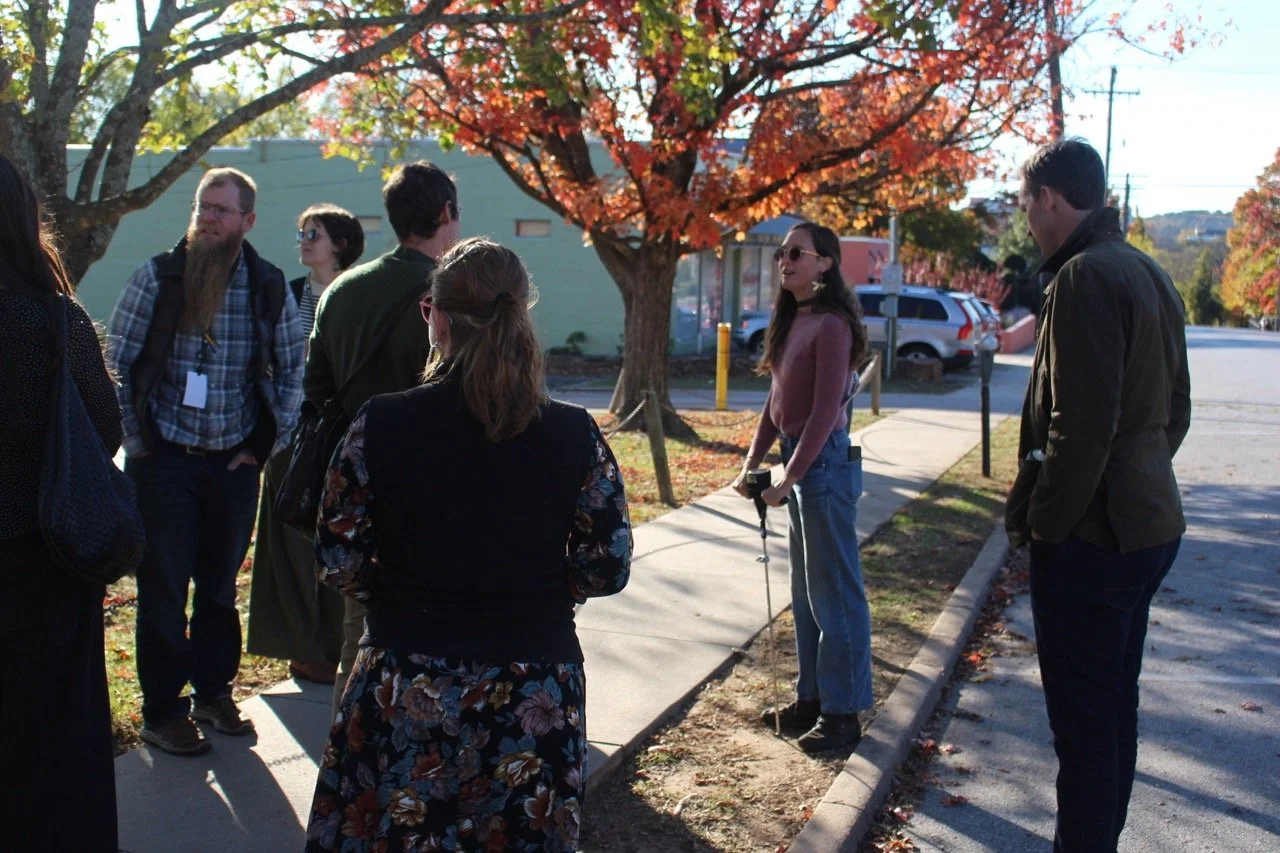
Annie Sales led an urban field tour on the role soil health plays in green infrastructure and landscaping. Her message: designing a landscape around the soil sets a project up to succeed, and healthy soil means better infiltration and cleaner water.
After the tour, Dr. Kristofor Brye and Dr. Diego Della Lunga from the University of Arkansas Department of Crop, Soil, and Environmental Sciences brought samples from across the state to show just how varied Arkansas soils are. Dr. Brye walked through the traits that set each soil type apart and pointed out that Arkansas offers free soil testing.
We were glad to be joined by team members from Ecological Design Group and Prism Design Studio, both are engineering firms that design green infrastructure across Northwest Arkansas. Other attendees included members of the U.S. Green Building Council (USGBC), who promote green infrastructure across the country.
Thank you Urban Land Institute Northwest Arkansas for hosting Place Summit, and thank you Crop, Soil, & Environmental Sciences (CSES) at the University of Arkansas for your contribution to the soils tour!