Beneath the Surface: Water in a Karst Landscape
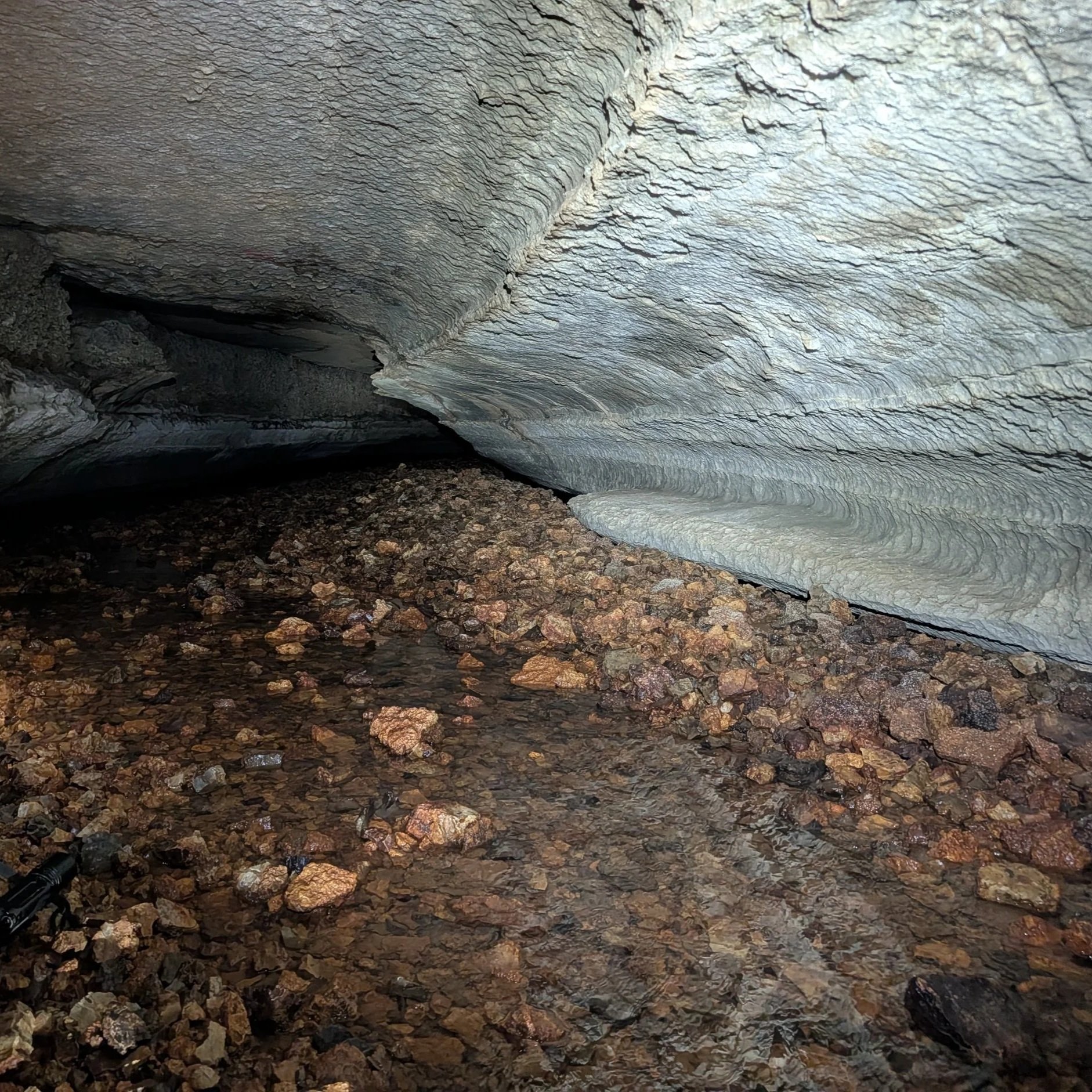
Logan Springs Cave near Siloam Springs.
Northwest Arkansas’s karst landscape plays a vital role in the region’s water quality. Its porous geology allows water, nutrients, and bacteria to travel quickly from the surface to underground springs with little natural filtration.
These springs flow into important waterways such as the Illinois River and Beaver Lake—Northwest Arkansas’s primary drinking water source. Protecting water quality in this region goes beyond aesthetics; it is directly connected to the health of the area’s growing population.
Logan Cave, pictured on the left, is one of the most biologically significant caves in the Ozarks and is home to the Ozark cavefish, Benton County cave crayfish, grotto salamander, Indiana bat, tricolored bat, and many other species. All of these species depend on clean water to survive.
Gathering data to guide strategic watershed management.
To understand how this karst topography affects water quality, scientists from the Arkansas Water Resources Center (AWRC) are monitoring nutrient, trace elements, and sediment levels in cave outflow, along with water flow using a SonTek SL acoustic Doppler sensor. This technology helps estimate how much water—and the pollutants it carries—are leaving the spring, providing critical data for protecting water resources as the region’s population continues to grow.
The caves that will be monitored for this study include Cave Springs and Logan Springs in the Illinois River Watershed, Blowing Springs in the Elk River Watershed, and Withrow Springs in the Beaver Lake Watershed. This project is funded by the Environmental Protection Agency (EPA) and will be conducted from October 2024 to September 2027.
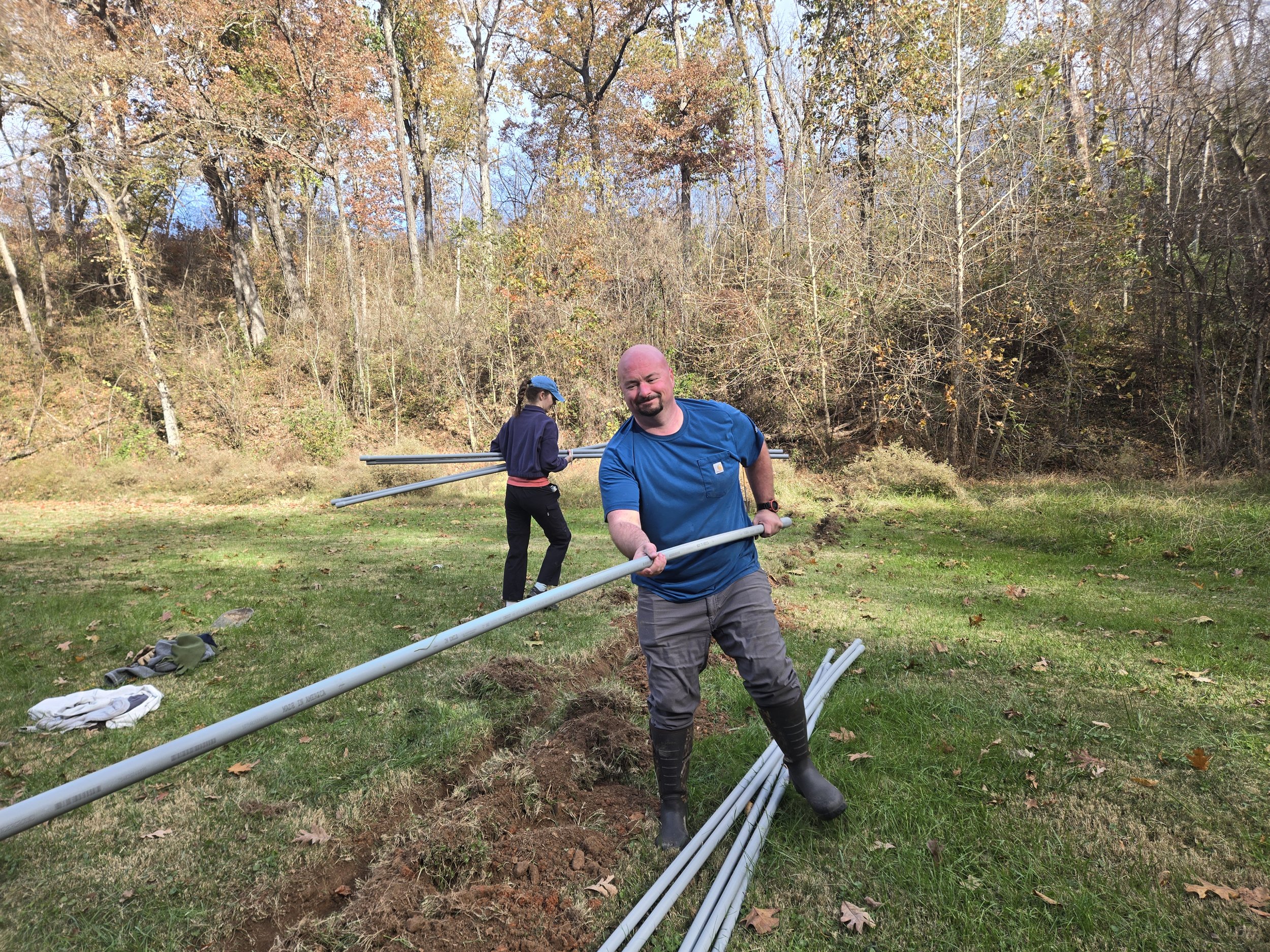
Brad Austin with AWRC installing the sensor near Cave Springs.
AWRC will publish their findings from this study within one year of its completion in the form of a technical report, and will be available to the public on AWRC’s website and the EPA’s Water Quality Portal (WQP), updated periodically.
A similar, more extensive study was performed prior to this current study by Tate Wentz, currently serving as the Chief of Water Strategy and Conservation for the Arkansas Department of Agriculture's Natural Resources Division and Michael Slay, currently serving as the Program Director at The Nature Conservancy. This study primarily reported concentrations, whereas the current study aims to calculate loads by measuring both concentration and discharge.
You can review a summary of the original study that was presented at the 22nd National Cave and Karst Management Symposium in 2017 here.
SO WHY CARE ABOUT KARST?
Karst features can result in surface water reaching ground water without natural filtration through soil, but why is this important? This water carries nutrients and bacteria from the landscape that can come from a variety of sources. One in particular are failed septic systems.
A failed septic system can often go undetected for years, but once the symptoms come to the surface (quite literally!), it can become hard to ignore. Symptoms of a failed septic can include, but are not excluded to:
- An area of your lawn remains wet year-round.
- The smell of sewage in the home or where the septic’s lateral field is.
- Toilets, sinks, or drains do not properly drain or backup into the home.
Please fill out an STRP inquiry by visiting www.irwp.org/septic or email septic@irwp.org to get started!
This program is funded thanks to the Arkansas Natural Resources Division.
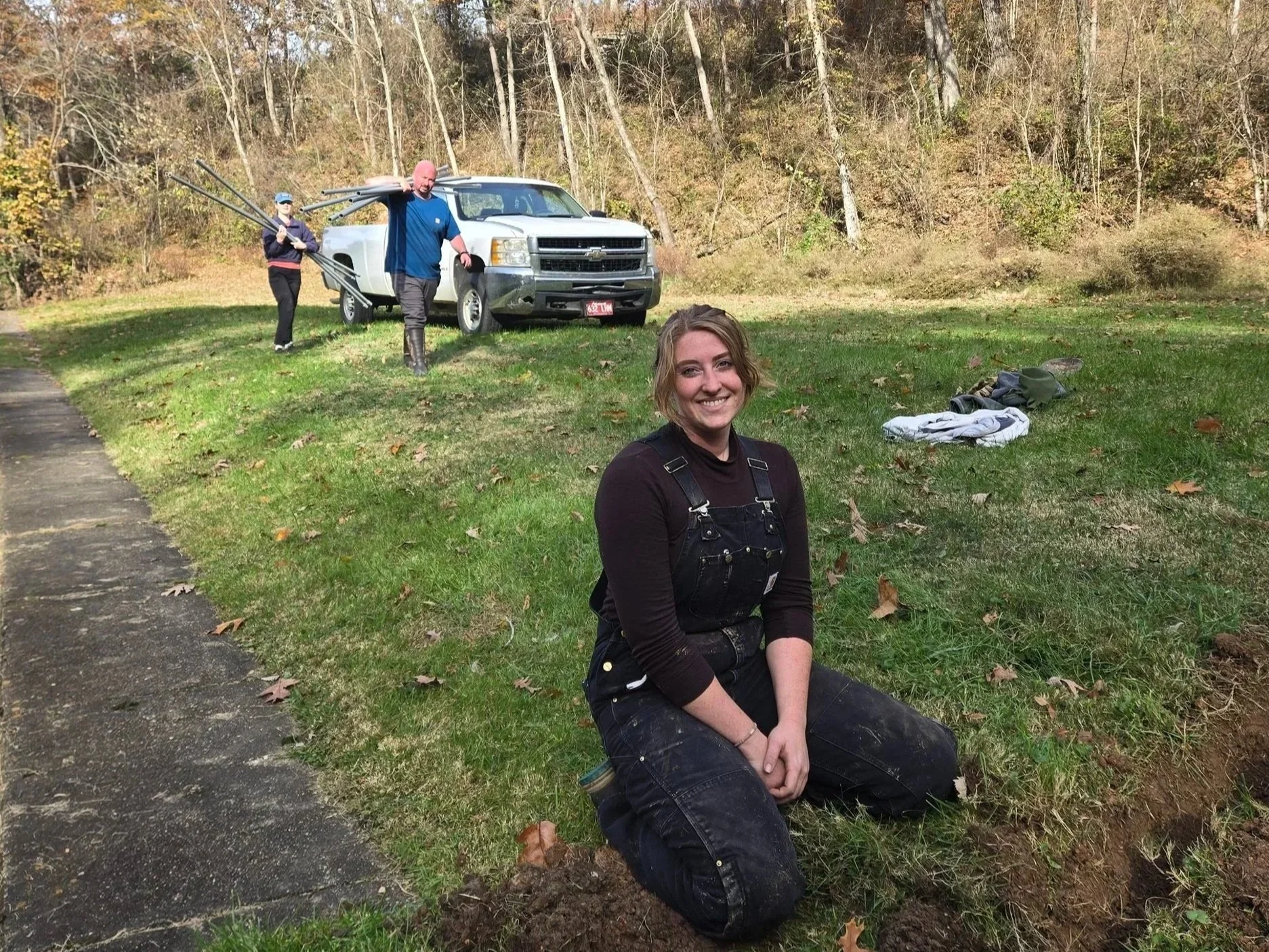
Sarah Alvey, pictured on the right, helps facilitate STRP.
MORE ABOUT THE ARKANSAS WATER RESOURCE CENTER
In 1964, Congress passed the Water Resources Research Act, establishing water research institutions like the Arkansas Water Resources Center (AWRC) at land-grant universities throughout the United States. AWRC, located at the University of Arkansas in Fayetteville, is part of a network of 54 water institutes. AWRC, in cooperation with the U.S. Geological Survey (USGS) and the National Institute for Water Resources (NIWR), has helped local, state and federal agencies learn to manage Arkansas’ water resources for more than 30 years.

Their Mission:
To support water research in Arkansas.
To train future water scientists and engineers.
To share information to stakeholders.
The Agriculture, Forestry, and Water Conference returns July 28–30, 2026, at the Don Tyson Center for Agricultural Sciences in Fayetteville!
To learn more about the conference please visit